I didn’t grow up eating hot cross buns, so when I first heard about them, I thought they were just regular dinner rolls with icing on top. Turns out, they’re so much more than that—they’re spiced, fruity, and traditionally eaten around Easter time.
The best part? You don’t need eggs or butter to make them taste good. This vegan version uses oil instead of butter and skips the eggs entirely, but you still get that soft, pillowy texture everyone loves. The real magic comes from the warm spices and citrus zest that make your whole kitchen smell like a bakery. And honestly, once you try making these at home, you’ll never go back to the store-bought ones that sit in plastic packages for who knows how long.
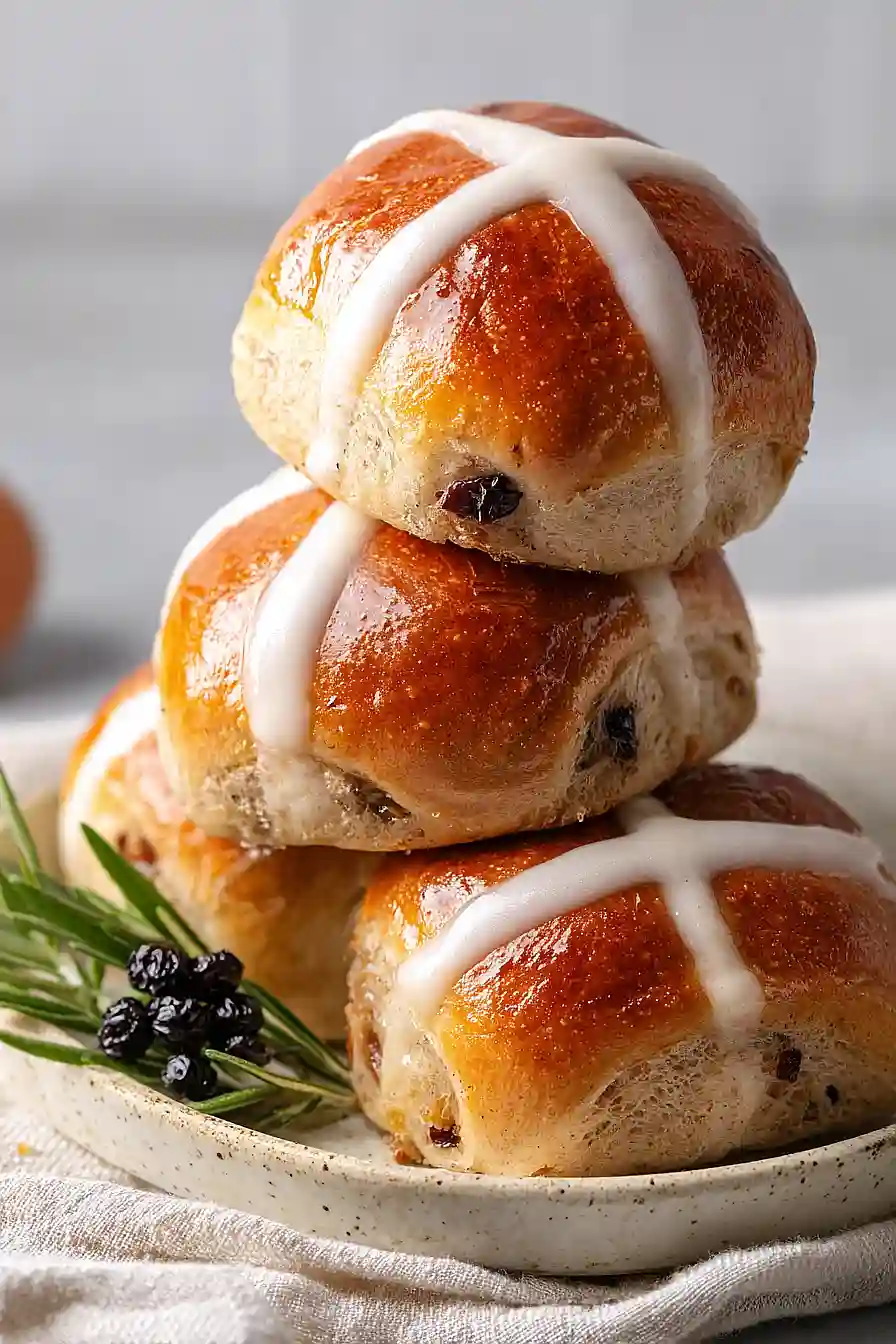
Why You’ll Love These Vegan Hot Cross Buns
- Plant-based and delicious – These buns prove you don’t need eggs or dairy to create soft, fluffy hot cross buns that taste just as good as the traditional version.
- Perfect for Easter or any time – While they’re a classic Easter treat, these spiced buns are so good you’ll want to make them year-round for breakfast or as a sweet snack.
- Aromatic spices and citrus – The combination of cinnamon, nutmeg, orange zest, and lemon zest fills your kitchen with an amazing smell while they bake.
- Easier than you think – Don’t let the yeast intimidate you—this recipe walks you through each step, and the result is totally worth the time.
- Great for sharing – This recipe makes a nice batch of buns that are perfect for bringing to brunch, holiday gatherings, or gifting to friends and neighbors.
What Kind of Flour Should I Use?
For vegan hot cross buns, all-purpose flour is your best bet and what most bakers reach for when making these traditional treats. Bread flour can also work if that’s what you have on hand, though it might make your buns slightly chewier due to the higher protein content. If you’re looking for a whole grain option, you can substitute up to half of the all-purpose flour with whole wheat flour, but keep in mind this will make your buns denser and give them a nuttier flavor. Whatever flour you choose, make sure to measure it properly by spooning it into your measuring cup and leveling it off, as packing it in can lead to dry, heavy buns.
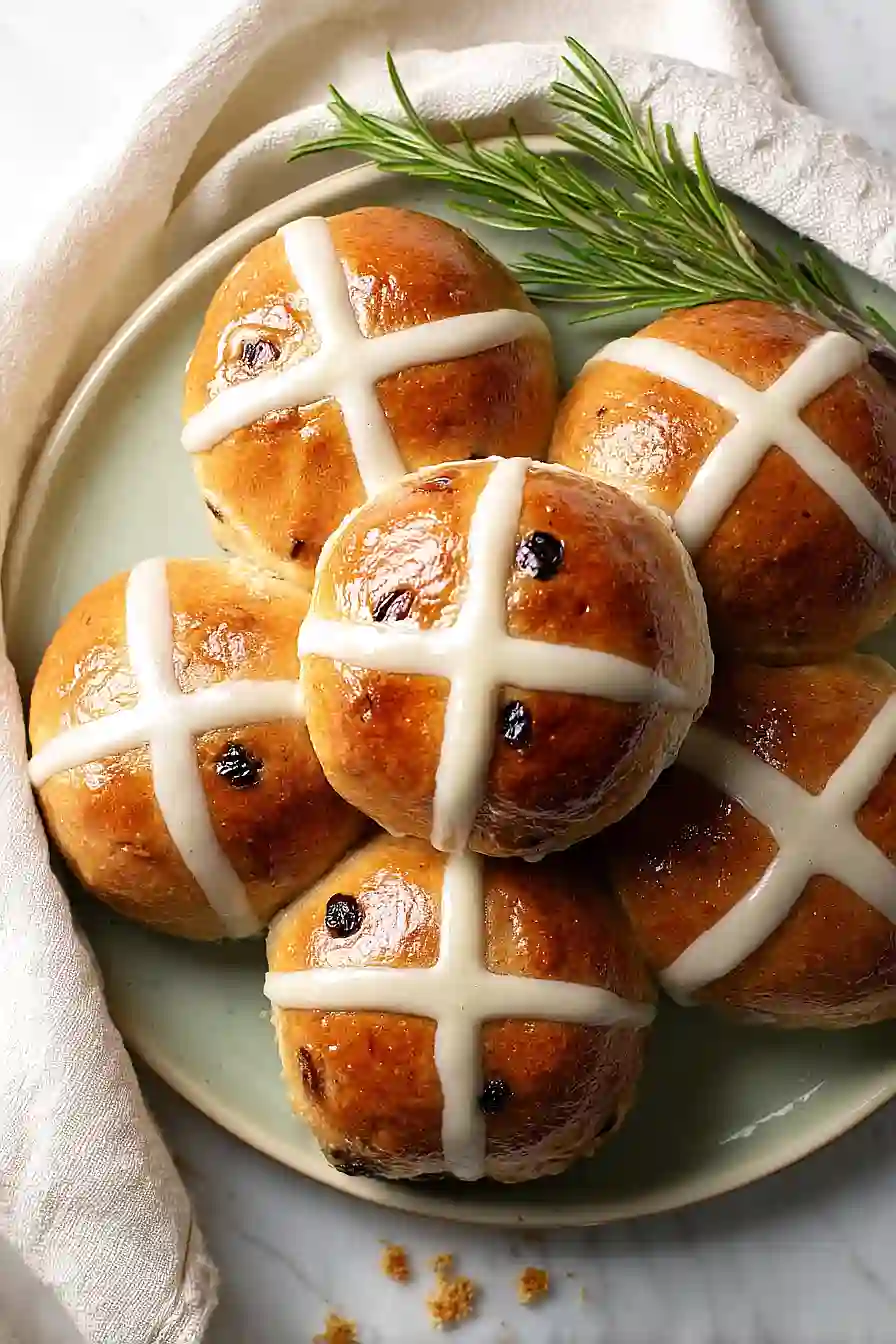
Options for Substitutions
This vegan recipe is already pretty adaptable, but here are some swaps you can make:
- Yeast: Active dry yeast is what you need here – don’t substitute with baking powder or baking soda, as yeast is essential for getting that soft, fluffy texture in these buns.
- Plant-based milk: Any non-dairy milk works great – almond, soy, oat, or coconut milk are all good options. Just make sure it’s unsweetened for the best results.
- Oil: You can use any neutral oil like vegetable, canola, or sunflower oil. Melted coconut oil or vegan butter also work if you want a richer flavor.
- Raisins and currants: Not a fan of raisins? Try dried cranberries, chopped dried apricots, or chocolate chips for a twist. You can also use all raisins or all currants if you only have one on hand.
- Orange and lemon zest: If you don’t have fresh citrus, you can use 1/2 teaspoon of orange extract or leave it out entirely – the buns will still taste great with just the spices.
- Maple syrup: Agave nectar or golden syrup work as easy swaps for the glaze. You could also use a bit of melted vegan butter mixed with sugar.
Watch Out for These Mistakes While Baking
The biggest mistake when making hot cross buns is using water that’s too hot for the yeast, which can kill it and leave you with dense, flat buns – aim for water around 110°F, or just warm to the touch like a comfortable bath.
Don’t skip the rising times or try to rush them by cranking up the heat, as proper rising at room temperature is what gives these buns their soft, fluffy texture.
Another common error is adding the raisins and currants too early in the kneading process, which can break them apart and create a mushy texture, so wait until the last minute of kneading like the recipe suggests.
Finally, make sure your buns are completely cool before piping the icing crosses – warm buns will cause the icing to melt and run, turning your neat crosses into a sticky mess.
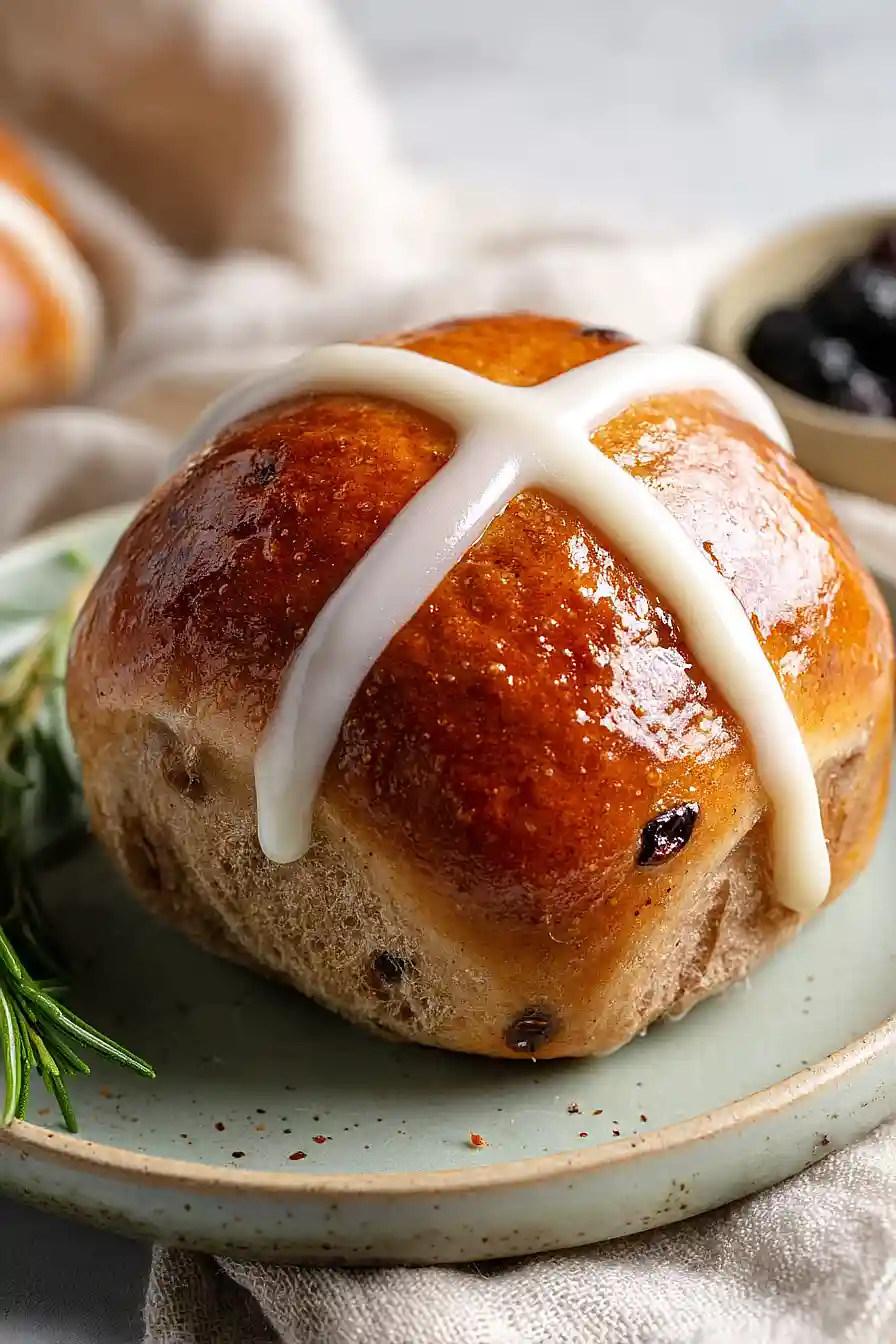
What to Serve With Hot Cross Buns?
Hot cross buns are perfect for Easter brunch or a cozy weekend breakfast, and they’re honestly delicious enough to enjoy on their own with a pat of vegan butter melting into the warm, spiced dough. I love serving them alongside a fresh fruit salad with berries and citrus to balance out the sweetness, or with some scrambled tofu and roasted tomatoes for a more filling meal. A cup of strong coffee or English breakfast tea is pretty much essential for dunking, and if you’re feeling fancy, a little dish of orange marmalade or lemon curd on the side makes for a nice spread. These buns also work great as an afternoon snack with just a simple cup of hot chocolate.
Storage Instructions
Store: Keep your hot cross buns in an airtight container or wrapped in plastic wrap at room temperature for up to 3 days. They’re best enjoyed within the first couple of days when they’re still soft and fresh.
Freeze: These buns freeze really well for longer storage. Wrap each one individually in plastic wrap, then place them all in a freezer bag for up to 3 months. You can freeze them with or without the icing on top.
Warm Up: To bring your buns back to life, let frozen ones thaw at room temperature for about an hour. Then pop them in a 300°F oven for 5-10 minutes to warm through and get that fresh-baked feel again. If you froze them without icing, add it after warming.
| Preparation Time | 90-100 minutes |
| Cooking Time | 20-25 minutes |
| Total Time | 110-125 minutes |
| Level of Difficulty | Medium |
| Servings | 12 buns |
Estimated Nutrition
Estimated nutrition for the whole recipe (without optional ingredients):
- Calories: 2700-3000
- Protein: 40-50 g
- Fat: 70-80 g
- Carbohydrates: 500-540 g
Ingredients
For the dough:
- 2 1/2 tsp yeast
- 1/4 cup sugar
- 1 tsp sugar
- 1/2 cup water
- 3/4 cup milk (warmed to 105-110°F to activate yeast)
- 1/3 cup oil
- 3/4 tsp salt
- 1 1/2 tsp cinnamon
- 1/2 tsp nutmeg (freshly grated for a much better aroma)
- 1 1/2 tbsp orange zest
- 1 1/2 tbsp lemon zest
- 4 cups flour (I always use King Arthur all-purpose flour)
- 1/2 cup raisins
- 1/4 cup currants
For the wash:
- 2 tbsp milk
- 1 tbsp maple syrup (I recommend using Crown maple syrup)
For the icing:
- 1/2 cup powdered sugar (sifted to remove lumps)
- 1/4 tsp vanilla essence
- 2 tsp milk
Step 1: Activate Yeast and Build the Dough Base
- 2 1/2 tsp yeast
- 1 tsp sugar
- 1/2 cup water
- 3/4 cup milk
- 1/3 cup oil
- 1/4 cup sugar
- 3/4 tsp salt
- 1 1/2 tsp cinnamon
- 1/2 tsp nutmeg
- 1 1/2 tbsp orange zest
- 1 1/2 tbsp lemon zest
- 1 cup flour
Combine the yeast, 1 tsp sugar, and warm water in a small bowl and let sit for 5 minutes until foamy—this confirms your yeast is alive and active.
In a large mixing bowl, combine the warmed milk, oil, 1/4 cup sugar, salt, cinnamon, nutmeg, orange zest, and lemon zest.
Pour in the activated yeast mixture and stir to combine.
Add 1 cup of flour and mix until no dry flour remains.
This creates the foundation for flavor development, with the spices and zest fully incorporated into the wet ingredients from the start.
Step 2: Knead and Incorporate the Remaining Flour
- 3 cups flour
Add 2 cups of flour to the wet mixture and use an electric mixer with a dough hook to knead for 2-3 minutes.
The dough will be shaggy at this point.
Add the remaining 1 cup of flour in 1/2 cup increments, mixing between each addition, until the dough pulls away from the sides of the bowl and is slightly tacky but not sticky.
If the dough seems too wet, add the remaining flour incrementally—you want it soft and pliable, not stiff.
Step 3: Knead and Add Dried Fruit
- 1/2 cup raisins
- 1/4 cup currants
Continue kneading the dough on medium speed for about 4 minutes until it becomes smooth and elastic.
During the last minute of kneading, add the raisins and currants, allowing them to be fully distributed throughout the dough.
The fruit should be evenly scattered so each bun gets a good amount.
I like to reserve a few raisins to press into the tops of the shaped buns for a prettier presentation.
Step 4: First Rise and Shape the Buns
- dough from Step 3
Transfer the dough to a lightly oiled bowl, turning it to coat all sides.
Cover with a damp towel or plastic wrap and let rise in a warm place for 1 hour until doubled in size.
While the dough rises, line a 9×13 inch baking pan with parchment paper.
After the rise, punch down the dough gently to release excess air, then divide it into 12 equal pieces.
Roll each piece into a smooth ball and arrange them seam-side down in the prepared pan, spacing them close enough to touch slightly.
Step 5: Second Rise and Prepare for Baking
- 1 tbsp maple syrup
- 2 tbsp milk
Cover the pan of buns with a damp towel and let them rise for 30 minutes until puffy and almost doubled.
While they rise, preheat your oven to 375°F.
In a small bowl, whisk together 1 tbsp maple syrup and 2 tbsp milk to create a glaze.
Once the second rise is complete, brush the glaze generously over the tops of each bun—this will give them a beautiful golden shine and subtle sweetness.
Step 6: Bake and Cool the Buns
Bake the buns at 375°F for 20 minutes until golden brown and a toothpick inserted into a bun comes out clean.
Remove from the oven and immediately transfer the buns to a cooling rack.
Let them cool completely—at least 30 minutes—before piping on the icing crosses.
This cooling time is important because the buns will continue to set and the icing will adhere better to a room-temperature surface.
Step 7: Prepare Icing and Pipe Crosses
- 1/2 cup powdered sugar
- 1/4 tsp vanilla essence
- 2 tsp milk
Once the buns have cooled completely, make the icing by whisking together the sifted powdered sugar, 1/4 tsp vanilla essence, and 2 tsp milk until smooth and pipeable.
If the icing is too thick, add milk a few drops at a time; if too thin, add more powdered sugar.
Transfer the icing to a piping bag fitted with a small round tip and pipe crosses on the top of each bun.
I prefer to pipe thin, delicate lines rather than thick ones—they look more elegant and professional.
Simple Vegan Hot Cross Buns
Ingredients
Method
- Combine the yeast, 1 tsp sugar, and warm water in a small bowl and let sit for 5 minutes until foamy—this confirms your yeast is alive and active. In a large mixing bowl, combine the warmed milk, oil, 1/4 cup sugar, salt, cinnamon, nutmeg, orange zest, and lemon zest. Pour in the activated yeast mixture and stir to combine. Add 1 cup of flour and mix until no dry flour remains. This creates the foundation for flavor development, with the spices and zest fully incorporated into the wet ingredients from the start.
- Add 2 cups of flour to the wet mixture and use an electric mixer with a dough hook to knead for 2-3 minutes. The dough will be shaggy at this point. Add the remaining 1 cup of flour in 1/2 cup increments, mixing between each addition, until the dough pulls away from the sides of the bowl and is slightly tacky but not sticky. If the dough seems too wet, add the remaining flour incrementally—you want it soft and pliable, not stiff.
- Continue kneading the dough on medium speed for about 4 minutes until it becomes smooth and elastic. During the last minute of kneading, add the raisins and currants, allowing them to be fully distributed throughout the dough. The fruit should be evenly scattered so each bun gets a good amount. I like to reserve a few raisins to press into the tops of the shaped buns for a prettier presentation.
- Transfer the dough to a lightly oiled bowl, turning it to coat all sides. Cover with a damp towel or plastic wrap and let rise in a warm place for 1 hour until doubled in size. While the dough rises, line a 9x13 inch baking pan with parchment paper. After the rise, punch down the dough gently to release excess air, then divide it into 12 equal pieces. Roll each piece into a smooth ball and arrange them seam-side down in the prepared pan, spacing them close enough to touch slightly.
- Cover the pan of buns with a damp towel and let them rise for 30 minutes until puffy and almost doubled. While they rise, preheat your oven to 375°F. In a small bowl, whisk together 1 tbsp maple syrup and 2 tbsp milk to create a glaze. Once the second rise is complete, brush the glaze generously over the tops of each bun—this will give them a beautiful golden shine and subtle sweetness.
- Bake the buns at 375°F for 20 minutes until golden brown and a toothpick inserted into a bun comes out clean. Remove from the oven and immediately transfer the buns to a cooling rack. Let them cool completely—at least 30 minutes—before piping on the icing crosses. This cooling time is important because the buns will continue to set and the icing will adhere better to a room-temperature surface.
- Once the buns have cooled completely, make the icing by whisking together the sifted powdered sugar, 1/4 tsp vanilla essence, and 2 tsp milk until smooth and pipeable. If the icing is too thick, add milk a few drops at a time; if too thin, add more powdered sugar. Transfer the icing to a piping bag fitted with a small round tip and pipe crosses on the top of each bun. I prefer to pipe thin, delicate lines rather than thick ones—they look more elegant and professional.