I’m always looking for ways to make homemade bread easier. Don’t get me wrong—I love a good crusty loaf as much as anyone. But sometimes I want fresh bread on the table without the kneading, rising, and waiting around for hours.
That’s where this Greek yogurt flatbread comes in. It uses just five ingredients you probably already have in your kitchen, and there’s no yeast involved. You mix everything together, let it rest for a few minutes, and cook the flatbreads in a hot skillet. The whole thing takes maybe 30 minutes from start to finish.
Want something to scoop up curry? Perfect. Need a quick side for soup? Done. Honestly, I make these at least once a week because they’re that easy and that good.

Why You’ll Love This Greek Yogurt Flatbread
- Just 3 ingredients – You only need Greek yogurt, flour, and salt to make this flatbread. No yeast, no waiting for dough to rise, and no complicated steps.
- High-protein alternative – The Greek yogurt adds extra protein to your flatbread, making it a more filling option than regular bread.
- Quick and easy – This comes together in about an hour, which is way faster than traditional bread recipes that require rising time.
- Perfect for meal prep – Make a batch and use them throughout the week for wraps, pizza bases, or as a side for dips and soups.
What Kind of Greek Yogurt Should I Use?
For this flatbread recipe, full-fat Greek yogurt is your best bet since it has the thick, creamy texture that helps bind the dough together. You can use low-fat or non-fat Greek yogurt if that’s what you have on hand, but the dough might be slightly stickier and less rich. Make sure you’re using actual Greek yogurt and not regular yogurt – Greek yogurt is strained to remove excess liquid, which is important for getting the right dough consistency. If your yogurt seems watery on top, just give it a quick stir before measuring it out, and you’ll be good to go.
Options for Substitutions
This simple flatbread recipe is pretty straightforward, but here are a few swaps you can make:
- Greek yogurt: Regular plain yogurt works too, though you might need to drain it for 30 minutes in a cheesecloth to remove excess liquid. Sour cream is another option that gives a slightly tangier flavor.
- All-purpose flour: You can use whole wheat flour for a nuttier taste and more fiber, but the flatbread will be denser. Start with half whole wheat and half all-purpose if you’re unsure. Self-rising flour also works – just skip the salt since it’s already in there.
- Salt: This is pretty essential for flavor, so I wouldn’t skip it. But if you’re watching sodium, you can reduce it to ½ teaspoon.
Watch Out for These Mistakes While Cooking
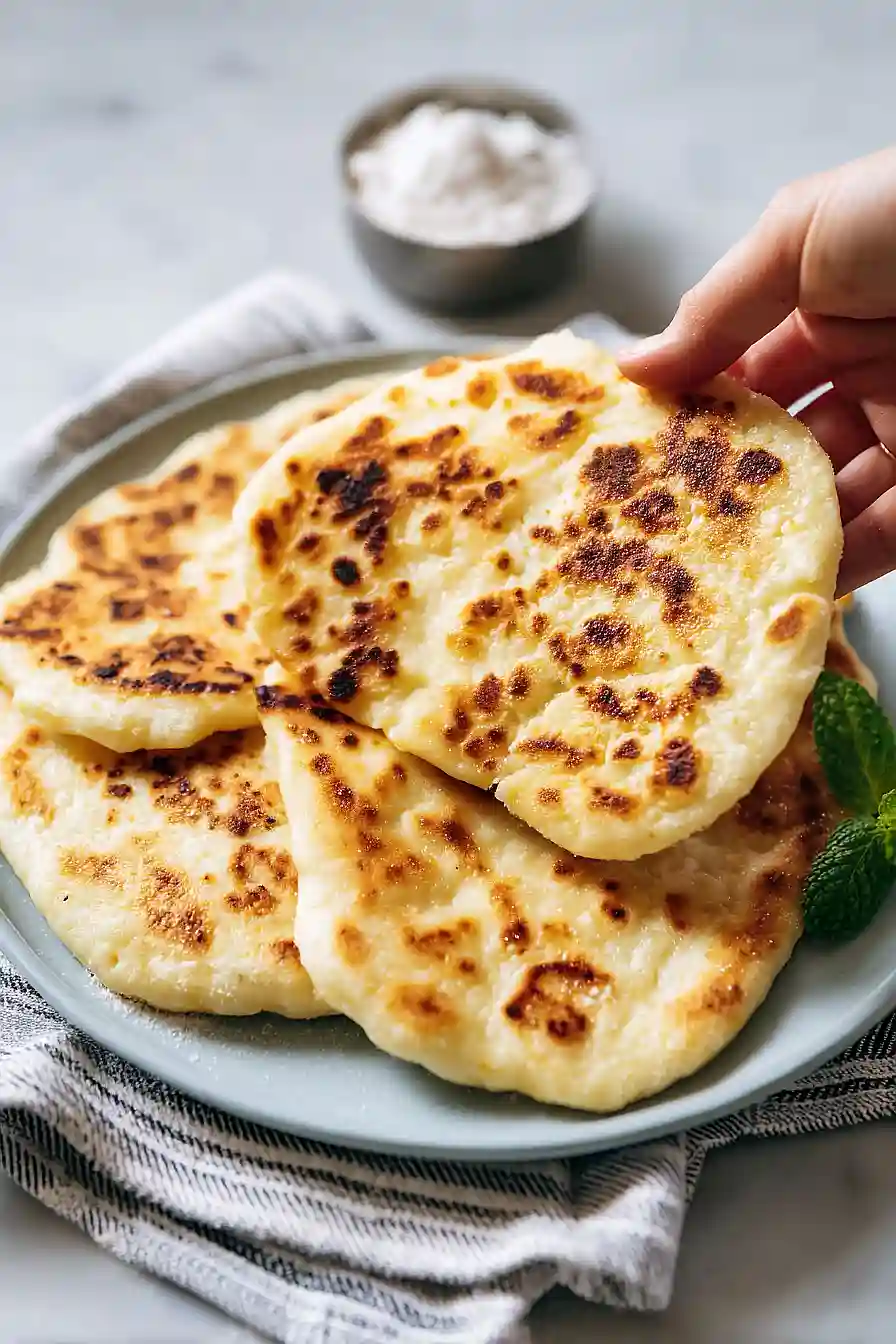
The biggest mistake people make with this flatbread is cooking it on medium heat instead of high, which results in dry, tough bread instead of soft, pillowy flatbreads with those nice charred spots.
Another common error is rolling the dough too thick – aim for about 1/8 inch thickness so the flatbreads cook through quickly and stay tender rather than becoming dense and chewy.
Don’t skip the 30-minute rest time after mixing, as this allows the gluten to relax and makes the dough much easier to roll out without it shrinking back constantly.
Finally, resist the urge to press down on the flatbreads while they cook – let them puff up naturally in the hot skillet, and keep them wrapped in a clean kitchen towel after cooking to stay soft and prevent them from drying out.
What to Serve With Greek Yogurt Flatbread?
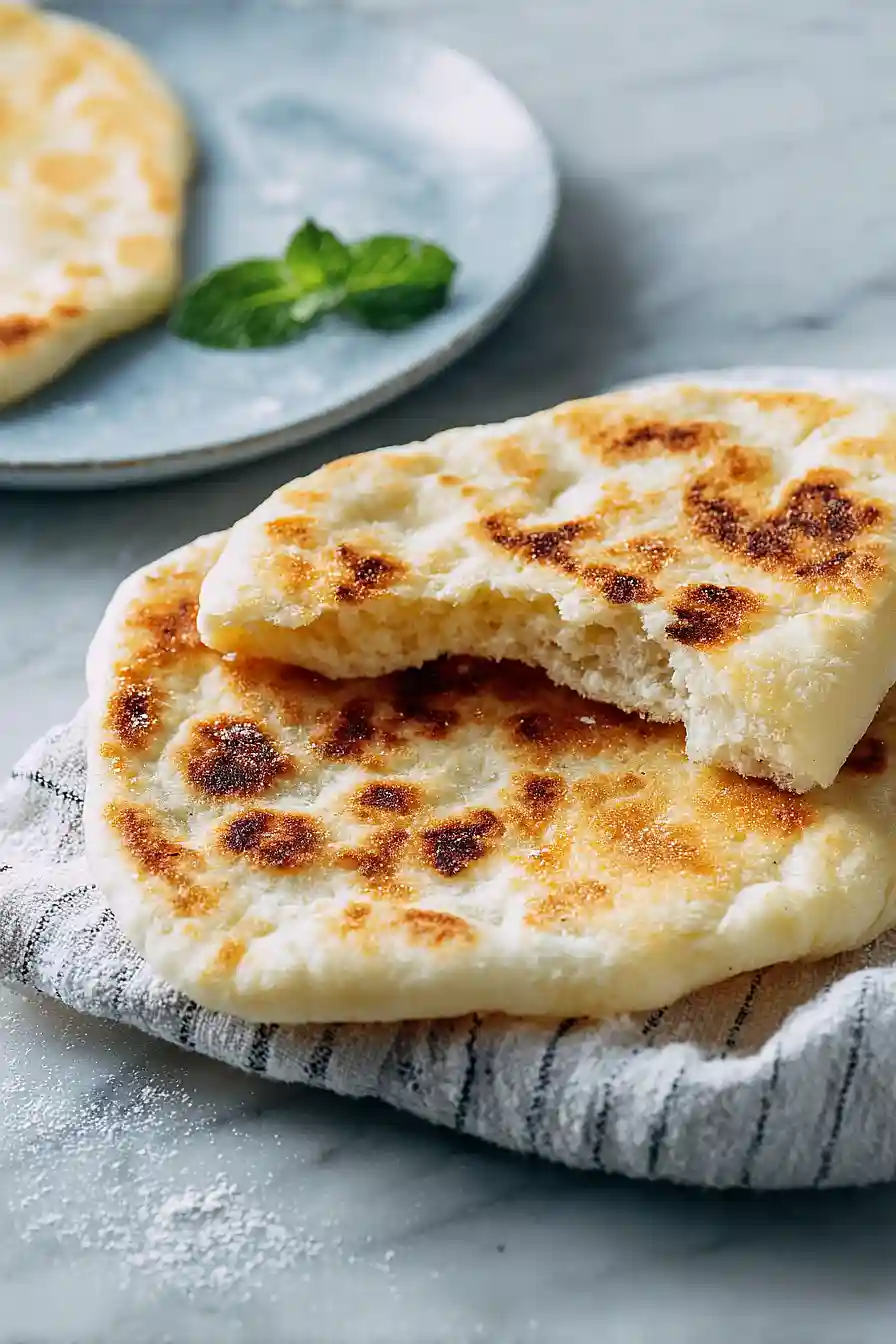
Greek yogurt flatbread is perfect for scooping up dips like hummus, tzatziki, or baba ganoush – basically any Mediterranean spread you have on hand. I love using it as a base for quick flatbread pizzas by adding some marinara sauce, mozzarella, and whatever toppings you’re craving. It also works great alongside soups and stews, especially something like lentil soup or chicken stew where you can tear off pieces and use it like a spoon. You can even slice it into strips and serve it with a Greek salad or use it to wrap up grilled chicken, falafel, or roasted vegetables for an easy lunch.
Storage Instructions
Store: Keep your flatbreads fresh by stacking them with parchment paper in between and storing in an airtight container or zip-top bag in the fridge for up to 4 days. They’re great to make ahead for the week so you always have fresh flatbread ready for wraps or dipping.
Freeze: These flatbreads freeze really well for up to 3 months. Just separate them with parchment paper, pop them in a freezer bag, and you’ve got homemade flatbread whenever you need it.
Warm Up: To bring your flatbread back to life, warm it in a dry skillet over medium heat for about 30 seconds per side. You can also wrap it in a damp paper towel and microwave for 15-20 seconds if you’re in a hurry.
| Preparation Time | 45-60 minutes |
| Cooking Time | 20-30 minutes |
| Total Time | 65-90 minutes |
| Level of Difficulty | Easy |
| Servings | 4 pieces |
Estimated Nutrition
Estimated nutrition for the whole recipe (without optional ingredients):
- Calories: 380-430
- Protein: 14-18 g
- Fat: 3-7 g
- Carbohydrates: 70-78 g
Ingredients
- 8 oz greek yogurt (I prefer Fage 5% for a richer dough)
- 1 cup all-purpose flour (I always use King Arthur all-purpose flour)
- 1 1/4 tsp salt
- 1/2 tsp baking powder
- 1 tbsp olive oil
Step 1: Combine Dry Ingredients and Mix the Dough
- 1 cup all-purpose flour
- 1 1/4 tsp salt
- 1/2 tsp baking powder
- 8 oz greek yogurt
In a medium bowl, whisk together the flour, salt, and baking powder to evenly distribute the leavening agents.
Add the Greek yogurt and stir with a wooden spoon or spatula until a shaggy dough begins to form.
The yogurt adds moisture and tang while creating a tender crumb.
If the dough feels too dry and crumbly, add yogurt 1 tablespoon at a time; if it’s too sticky to handle, dust in a bit more flour.
Mix until you have a cohesive, slightly tacky dough with no dry flour streaks.
Step 2: Rest and Relax the Dough
Shape the dough into a rough ball and place it in the same bowl or on a clean surface.
Let it rest for 30 minutes at room temperature without covering it.
This resting period allows the flour to fully hydrate and gluten to relax, making the dough much easier to shape and resulting in a more tender flatbread.
I find that this short rest is the key to getting soft, pliable dough that doesn’t spring back when you roll it.
Step 3: Divide and Shape the Dough Portions
After resting, turn the dough out onto a lightly floured work surface and knead gently for just a few turns to bring it back together.
Divide the dough into 4 equal pieces and roll each piece into a ball.
Working with one ball at a time, use a rolling pin or your hands to roll it into a thin, even circle about 1/8-inch thick, roughly 6-8 inches in diameter.
If the dough shrinks back, let it rest for a minute before continuing to roll.
Lightly flour as needed to prevent sticking, and stack the rolled flatbreads with parchment paper between them so they don’t stick together.
Step 4: Heat the Skillet and Cook the Flatbreads
- 1 tbsp olive oil
Heat a large cast-iron skillet or non-stick pan over medium-high heat and lightly brush or drizzle the olive oil across the surface.
Once the oil shimmers and the pan is hot, carefully lay one flatbread into the skillet.
Cook for 2-3 minutes without moving it, allowing it to develop golden-brown spots and light charring on the bottom.
Flip the flatbread and cook the other side for another 2-3 minutes until it too has golden-brown spots and slight char marks.
I love the slight char because it adds depth of flavor and creates a pleasant texture contrast.
Transfer the cooked flatbread to a plate and repeat with the remaining three portions, adding a touch more oil if needed between batches.
Chewy Greek Yogurt Flatbread
Ingredients
Method
- In a medium bowl, whisk together the flour, salt, and baking powder to evenly distribute the leavening agents. Add the Greek yogurt and stir with a wooden spoon or spatula until a shaggy dough begins to form. The yogurt adds moisture and tang while creating a tender crumb. If the dough feels too dry and crumbly, add yogurt 1 tablespoon at a time; if it's too sticky to handle, dust in a bit more flour. Mix until you have a cohesive, slightly tacky dough with no dry flour streaks.
- Shape the dough into a rough ball and place it in the same bowl or on a clean surface. Let it rest for 30 minutes at room temperature without covering it. This resting period allows the flour to fully hydrate and gluten to relax, making the dough much easier to shape and resulting in a more tender flatbread. I find that this short rest is the key to getting soft, pliable dough that doesn't spring back when you roll it.
- After resting, turn the dough out onto a lightly floured work surface and knead gently for just a few turns to bring it back together. Divide the dough into 4 equal pieces and roll each piece into a ball. Working with one ball at a time, use a rolling pin or your hands to roll it into a thin, even circle about 1/8-inch thick, roughly 6-8 inches in diameter. If the dough shrinks back, let it rest for a minute before continuing to roll. Lightly flour as needed to prevent sticking, and stack the rolled flatbreads with parchment paper between them so they don't stick together.
- Heat a large cast-iron skillet or non-stick pan over medium-high heat and lightly brush or drizzle the olive oil across the surface. Once the oil shimmers and the pan is hot, carefully lay one flatbread into the skillet. Cook for 2-3 minutes without moving it, allowing it to develop golden-brown spots and light charring on the bottom. Flip the flatbread and cook the other side for another 2-3 minutes until it too has golden-brown spots and slight char marks. I love the slight char because it adds depth of flavor and creates a pleasant texture contrast. Transfer the cooked flatbread to a plate and repeat with the remaining three portions, adding a touch more oil if needed between batches.