Traditional hot cross buns are wonderful, but sometimes you want to shake things up a bit without straying too far from what makes them special. If you’re tired of the same old raisin-studded version but still crave those soft, spiced buns with their signature cross on top, you might feel stuck between tradition and trying something new.
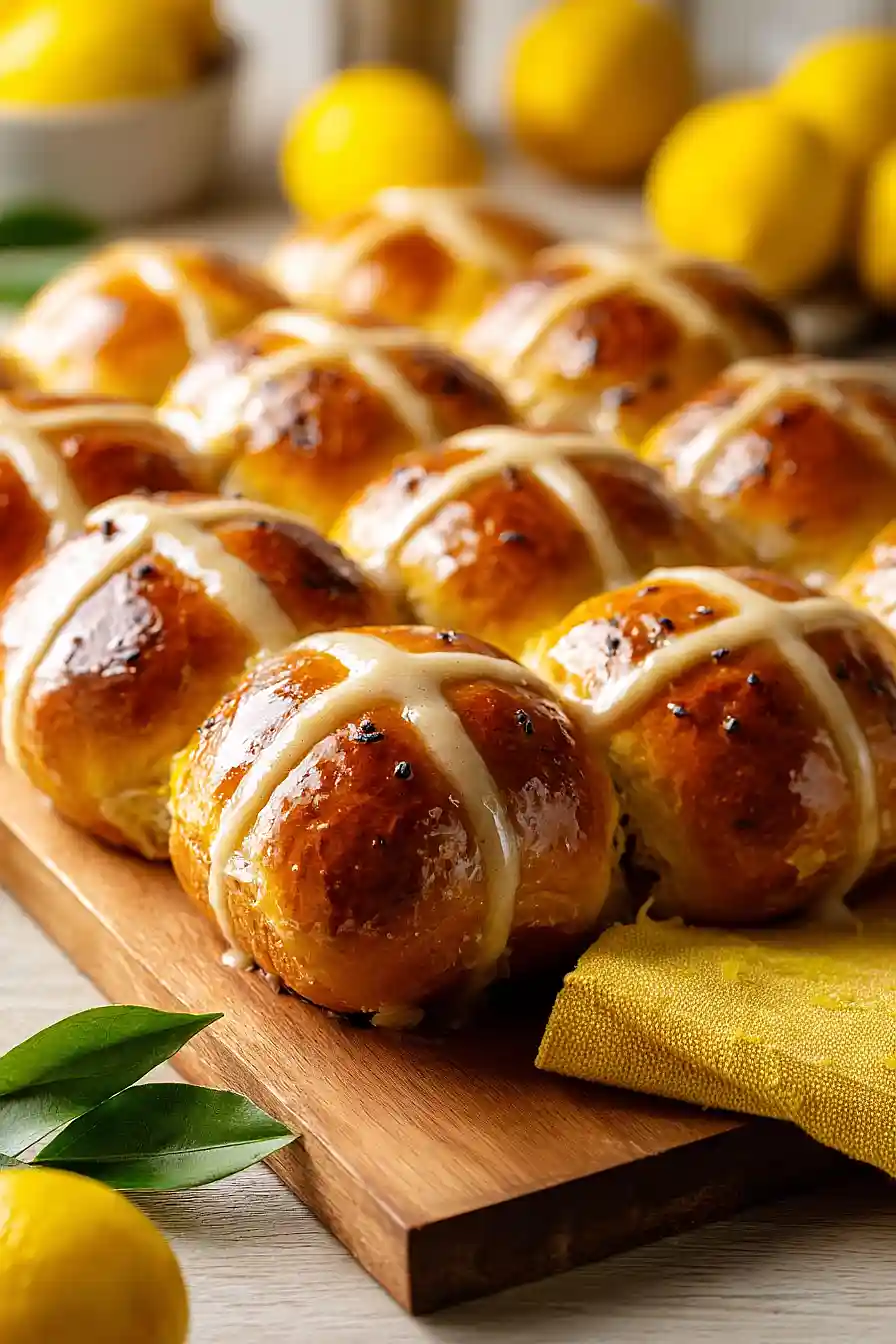
That’s where these lemon hot cross buns come in. They keep everything you love about the classic—the fluffy texture, the sweetness, the comforting warmth—but swap out the usual spices and dried fruit for bright lemon zest, poppy seeds, and candied citrus peel. They’re perfect for Easter brunch or any spring morning when you want something a little different.

Why You’ll Love These Lemon Hot Cross Buns
- Fresh citrus twist – The bright lemon flavor and poppy seeds give these traditional buns a refreshing update that’s perfect for spring.
- Made in under 2 hours – From start to finish, you’ll have warm, homemade buns on the table in about 90 minutes, making them doable even on a busy weekend morning.
- Bakery-style results at home – These buns look and taste like they came from a fancy bakery, but they’re surprisingly simple to make in your own kitchen.
- Perfect for sharing – Whether it’s Easter brunch or a casual breakfast with friends, these buns are a crowd-pleaser that’ll have everyone asking for the recipe.
What Kind of Bread Flour Should I Use?
For hot cross buns, bread flour is your best bet because it has a higher protein content than all-purpose flour, which helps create that soft, pillowy texture we’re looking for. If you can’t find bread flour at your store, you can substitute all-purpose flour and the buns will still turn out tasty, though they might be slightly less chewy. Some bakers like to use a mix of bread flour and all-purpose for a texture that’s right in between, so feel free to experiment. Just make sure your flour is fresh – old flour can affect how well your dough rises and give your buns an off taste.
Options for Substitutions
These lemon hot cross buns are pretty forgiving when it comes to swaps:
- Bread flour: You can use all-purpose flour instead of bread flour. The buns might be slightly less chewy, but they’ll still turn out great.
- Citrus peel: If you can’t find candied citrus peel, try using dried cranberries, raisins, or chopped dried apricots. You could also make your own candied lemon peel if you have extra time.
- Poppy seeds: Not a fan of poppy seeds? Leave them out completely or swap them for sesame seeds for a different texture and flavor.
- Whole milk: Any milk works here – 2%, skim, or even non-dairy options like oat or almond milk. Just keep in mind that lower fat milks might make slightly less rich buns.
- Fresh lemon: While fresh lemon zest and juice give the best flavor, you can use bottled lemon juice in a pinch. For zest, you could try 1-2 teaspoons of lemon extract, though the flavor won’t be quite as bright.
- Yeast: Don’t substitute the yeast – it’s essential for these buns to rise properly and get that soft, fluffy texture.
Watch Out for These Mistakes While Baking
The biggest mistake when making hot cross buns is not kneading the dough long enough, which results in dense, heavy buns instead of light and fluffy ones – make sure to knead for the full 10 minutes until the dough is smooth and elastic.
Another common error is placing the buns too far apart on the tray, but they should actually be close together (about 1 inch apart) so they rise up instead of spreading out, creating that classic soft, pull-apart texture.
Don’t skip rubbing the lemon zest into the sugar at the beginning, as this step releases the essential oils and distributes the lemon flavor throughout the dough much better than just mixing them in.
Finally, make sure your milk is warm but not hot (around body temperature) when adding it to the yeast – if it’s too hot, it will kill the yeast and your buns won’t rise properly.

What to Serve With Lemon Hot Cross Buns?
These lemon hot cross buns are perfect for a weekend breakfast or brunch spread alongside a pot of hot tea or freshly brewed coffee. I love slicing them in half and spreading on some salted butter while they’re still warm, or you can go a bit fancier with cream cheese or lemon curd for extra citrus flavor. They’re also great served with fresh fruit like berries or orange segments, which complement the lemon and poppy seed flavors nicely. If you’re making them for Easter brunch, set them out with scrambled eggs, crispy bacon, and a simple fruit salad for a complete meal that everyone will enjoy.
Storage Instructions
Store: Keep your lemon hot cross buns in an airtight container or bread box at room temperature for up to 3 days. They’re best enjoyed within the first day or two when they’re still soft and fresh. If they start to firm up a bit, a quick 10-second zap in the microwave brings them right back to life.
Freeze: These buns freeze really well for up to 3 months. Let them cool completely, then wrap each one individually in plastic wrap before placing them all in a freezer bag. This way you can grab just one or two whenever a craving hits without thawing the whole batch.
Thaw and Serve: To enjoy your frozen buns, just leave them out at room temperature for about an hour, or pop them in a 300°F oven for 10 minutes until warmed through. You can also slice them in half and toast them for a nice crispy texture that pairs perfectly with butter or jam.
| Preparation Time | 60-70 minutes |
| Cooking Time | 25-30 minutes |
| Total Time | 85-100 minutes |
| Level of Difficulty | Medium |
| Servings | 12 buns |
Estimated Nutrition
Estimated nutrition for the whole recipe (without optional ingredients):
- Calories: 3300-3500
- Protein: 70-80 g
- Fat: 70-80 g
- Carbohydrates: 620-660 g
Ingredients
For the dough:
- 4.2 oz sugar
- zest of 2 lemons (removed in Wide strips and then finely minced)
- 23 oz bread flour (I always use King Arthur for a better rise)
- 10 g yeast
- 0.75 tsp salt
- 12.5 fl oz milk (room temperature, about 70°F)
- 3 tbsp poppy seeds
- 2.2 oz butter (I like Kerrygold unsalted butter for this)
- 1 egg
- 4.6 oz citrus peel (diced into 1/4-inch pieces)
- 0.5 tsp vanilla extract
For the crosses:
- 2.6 oz flour
- 2.5 fl oz water
For the glaze and garnish:
- 2.6 fl oz lemon juice (freshly squeezed for best flavor)
- 1.6 oz sugar
- poppy seeds
- lemon peel
Step 1: Prepare Mise en Place and Infuse Sugar with Lemon
- 4.2 oz sugar
- zest of 2 lemons
- 23 oz bread flour
- 10 g yeast
- 0.75 tsp salt
- 12.5 fl oz milk
- 1 egg
- 0.5 tsp vanilla extract
Rub the finely minced lemon zest into the 4.2 oz of sugar using your fingertips, pressing gently to release the oils and create a fragrant lemon sugar.
This infuses the sugar with bright citrus flavor that will permeate throughout the dough.
While the zest releases its oils, measure out all remaining dry ingredients (bread flour, yeast, salt) and the wet ingredients (room temperature milk, egg, vanilla extract) into separate bowls for quick incorporation.
Step 2: Mix and Knead the Dough
- dry ingredient mixture from Step 1
- wet ingredient mixture from Step 1
- 4.6 oz citrus peel
- 3 tbsp poppy seeds
- 2.2 oz butter
Combine the dry ingredients (bread flour, yeast, salt, and lemon sugar from Step 1) in a large bowl.
Create a well in the center and pour in the milk, egg, and vanilla extract from Step 1, then add the diced citrus peel and 3 tbsp poppy seeds.
Mix by hand until a shaggy dough forms, then add the butter in small pieces and knead on medium speed (using a stand mixer) for 10 minutes until the dough becomes smooth and elastic.
I like to let the mixer do the work here rather than hand-kneading—it develops the gluten more evenly for a better rise.
Step 3: First Rise
- dough from Step 2
Shape the dough from Step 2 into a smooth ball and place it in a lightly oiled bowl or covered container.
Cover loosely with plastic wrap or a damp towel and let it rise in a warm spot (around 75-80°F) for 1 to 1.5 hours, until roughly doubled in size.
You can use your oven with the light on, a proofing box, or any warm corner of your kitchen.
Step 4: Shape the Buns
- dough from Step 3
Preheat your oven to 180°C (350°F) and line a baking tray with parchment paper.
Turn out the risen dough from Step 3 onto a lightly floured surface and gently flatten it.
Divide the dough into 12 equal pieces (I find it helpful to cut it into quarters first, then divide each quarter into three pieces for consistency).
Roll each piece between your palms into a smooth, tight ball and place seam-side down on the prepared tray, spacing them about 1.5 inches apart to allow room for rising.
Step 5: Second Rise and Prepare Cross Paste
- buns from Step 4
- 2.6 oz flour
- 2.5 fl oz water
Cover the shaped buns loosely with plastic wrap and let them rise for 45 minutes at room temperature until puffy and touching slightly.
While the buns rise, mix the 2.6 oz flour with the 2.5 fl oz water in a small bowl, stirring until you have a smooth, pipeable paste.
The paste should be thin enough to pipe through a narrow tip but thick enough to hold its shape on the buns.
Step 6: Pipe Crosses and Bake
- buns from Step 5
- cross paste from Step 5
Once the buns have risen, pipe the cross paste from Step 5 onto each bun in two thin, perpendicular lines using a small piping bag or squeeze bottle.
Bake in the preheated 180°C oven for 22 to 25 minutes until the buns are golden brown and the crosses are set.
The buns should sound hollow when tapped on the bottom when done.
Step 7: Finish with Lemon Glaze and Toppings
- baked buns from Step 6
- 2.6 fl oz lemon juice
- 1.6 oz sugar
- poppy seeds
- lemon peel
While the buns bake, combine the 2.6 fl oz of freshly squeezed lemon juice with the 1.6 oz of sugar in a small saucepan and bring to a boil, stirring gently for about 1 minute until the sugar dissolves completely.
The syrup will thicken slightly as it cools.
Remove the hot buns from the oven and immediately brush the warm lemon syrup over each bun, then sprinkle with poppy seeds and small pieces of candied lemon peel for garnish.
Serve the buns warm or at room temperature.
Poppy Seed Lemon Hot Cross Buns
Ingredients
Method
- Rub the finely minced lemon zest into the 4.2 oz of sugar using your fingertips, pressing gently to release the oils and create a fragrant lemon sugar. This infuses the sugar with bright citrus flavor that will permeate throughout the dough. While the zest releases its oils, measure out all remaining dry ingredients (bread flour, yeast, salt) and the wet ingredients (room temperature milk, egg, vanilla extract) into separate bowls for quick incorporation.
- Combine the dry ingredients (bread flour, yeast, salt, and lemon sugar from Step 1) in a large bowl. Create a well in the center and pour in the milk, egg, and vanilla extract from Step 1, then add the diced citrus peel and 3 tbsp poppy seeds. Mix by hand until a shaggy dough forms, then add the butter in small pieces and knead on medium speed (using a stand mixer) for 10 minutes until the dough becomes smooth and elastic. I like to let the mixer do the work here rather than hand-kneading—it develops the gluten more evenly for a better rise.
- Shape the dough from Step 2 into a smooth ball and place it in a lightly oiled bowl or covered container. Cover loosely with plastic wrap or a damp towel and let it rise in a warm spot (around 75-80°F) for 1 to 1.5 hours, until roughly doubled in size. You can use your oven with the light on, a proofing box, or any warm corner of your kitchen.
- Preheat your oven to 180°C (350°F) and line a baking tray with parchment paper. Turn out the risen dough from Step 3 onto a lightly floured surface and gently flatten it. Divide the dough into 12 equal pieces (I find it helpful to cut it into quarters first, then divide each quarter into three pieces for consistency). Roll each piece between your palms into a smooth, tight ball and place seam-side down on the prepared tray, spacing them about 1.5 inches apart to allow room for rising.
- Cover the shaped buns loosely with plastic wrap and let them rise for 45 minutes at room temperature until puffy and touching slightly. While the buns rise, mix the 2.6 oz flour with the 2.5 fl oz water in a small bowl, stirring until you have a smooth, pipeable paste. The paste should be thin enough to pipe through a narrow tip but thick enough to hold its shape on the buns.
- Once the buns have risen, pipe the cross paste from Step 5 onto each bun in two thin, perpendicular lines using a small piping bag or squeeze bottle. Bake in the preheated 180°C oven for 22 to 25 minutes until the buns are golden brown and the crosses are set. The buns should sound hollow when tapped on the bottom when done.
- While the buns bake, combine the 2.6 fl oz of freshly squeezed lemon juice with the 1.6 oz of sugar in a small saucepan and bring to a boil, stirring gently for about 1 minute until the sugar dissolves completely. The syrup will thicken slightly as it cools. Remove the hot buns from the oven and immediately brush the warm lemon syrup over each bun, then sprinkle with poppy seeds and small pieces of candied lemon peel for garnish. Serve the buns warm or at room temperature.