Spring has always meant one thing in my kitchen: fresh vegetables everywhere. I get just as excited about the first asparagus at the farmers market as I do about summer tomatoes. But when the weather gets warmer, I don’t want to turn on my oven or stand over a hot stove for too long. I need something that comes together quickly and tastes even better at room temperature.
That’s why this orzo salad has become my go-to when spring vegetables are in season. It takes about twenty minutes to make, and I can prep it in the morning before work or even the night before. The asparagus and peas stay bright green, and the lemon dressing gets better as it sits.
Want something light for lunch? This works. Need a side dish for grilled chicken? Same. Honestly, I’ve eaten this straight from the fridge for breakfast more times than I’d like to admit.
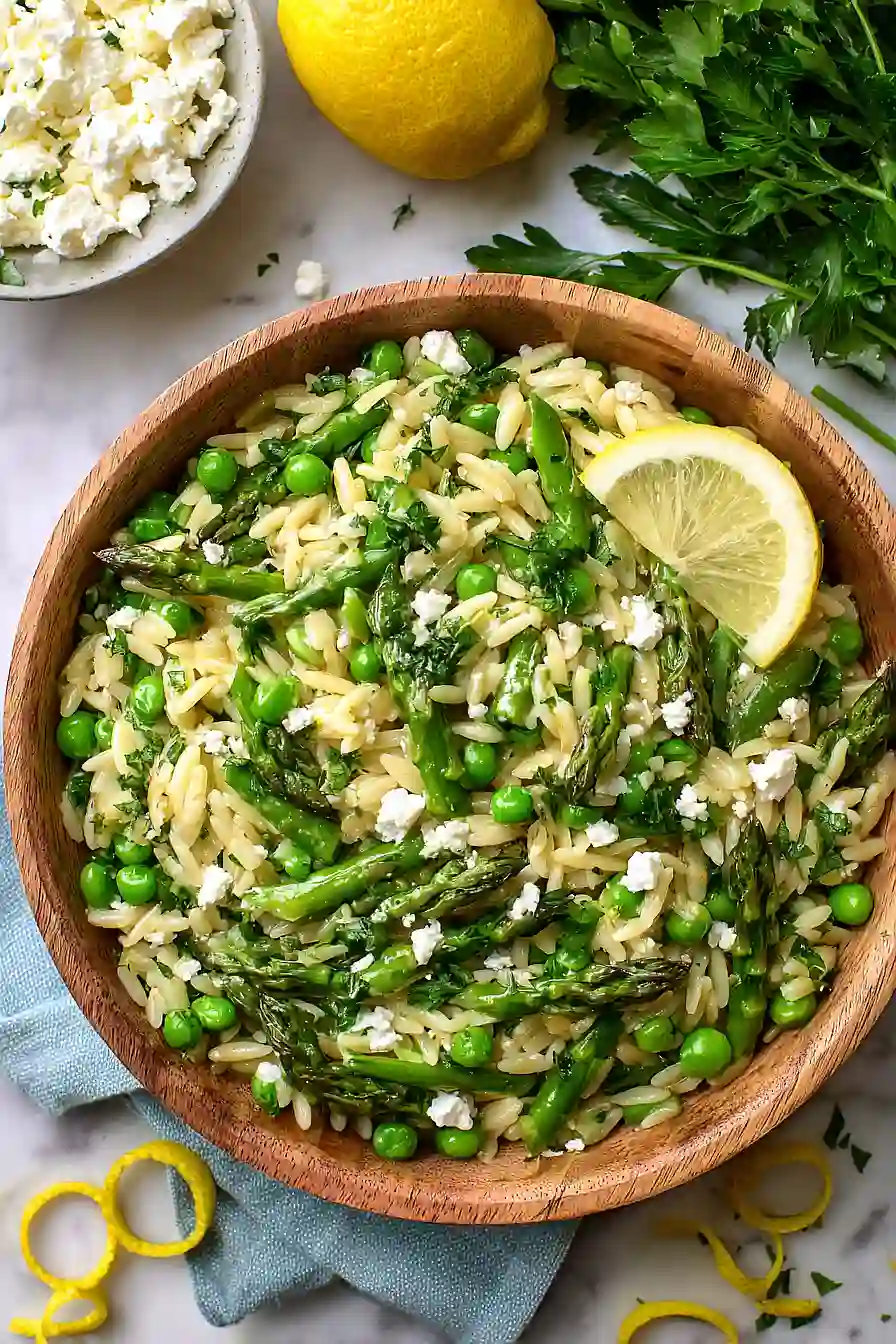
Why You’ll Love This Asparagus and Pea Orzo Salad
- Fresh spring flavors – The combination of crisp asparagus, sweet peas, and tangy goat cheese creates a light and refreshing dish that’s perfect for warmer weather.
- Great for meal prep – This salad actually gets better as it sits, making it ideal to prepare ahead for lunches throughout the week or to bring to potlucks and gatherings.
- Simple ingredients – You only need a handful of fresh vegetables and pantry staples to pull this together, and most of them are things you probably already have on hand.
- Versatile serving options – Enjoy it as a light main course on its own, or serve it as a side dish alongside grilled chicken or fish for a complete meal.
What Kind of Orzo Should I Use?
Regular orzo pasta works perfectly for this salad, and you’ll find it in the pasta aisle at pretty much any grocery store. If you’re looking for a healthier option, whole wheat orzo is a great choice that adds a nice nutty flavor and extra fiber to the dish. You can also use gluten-free orzo if that’s what you need – just keep an eye on the cooking time since it can sometimes cook a bit faster than regular orzo. Whatever type you choose, make sure to cook it al dente so it holds up well in the salad and doesn’t get mushy when you toss it with the dressing.
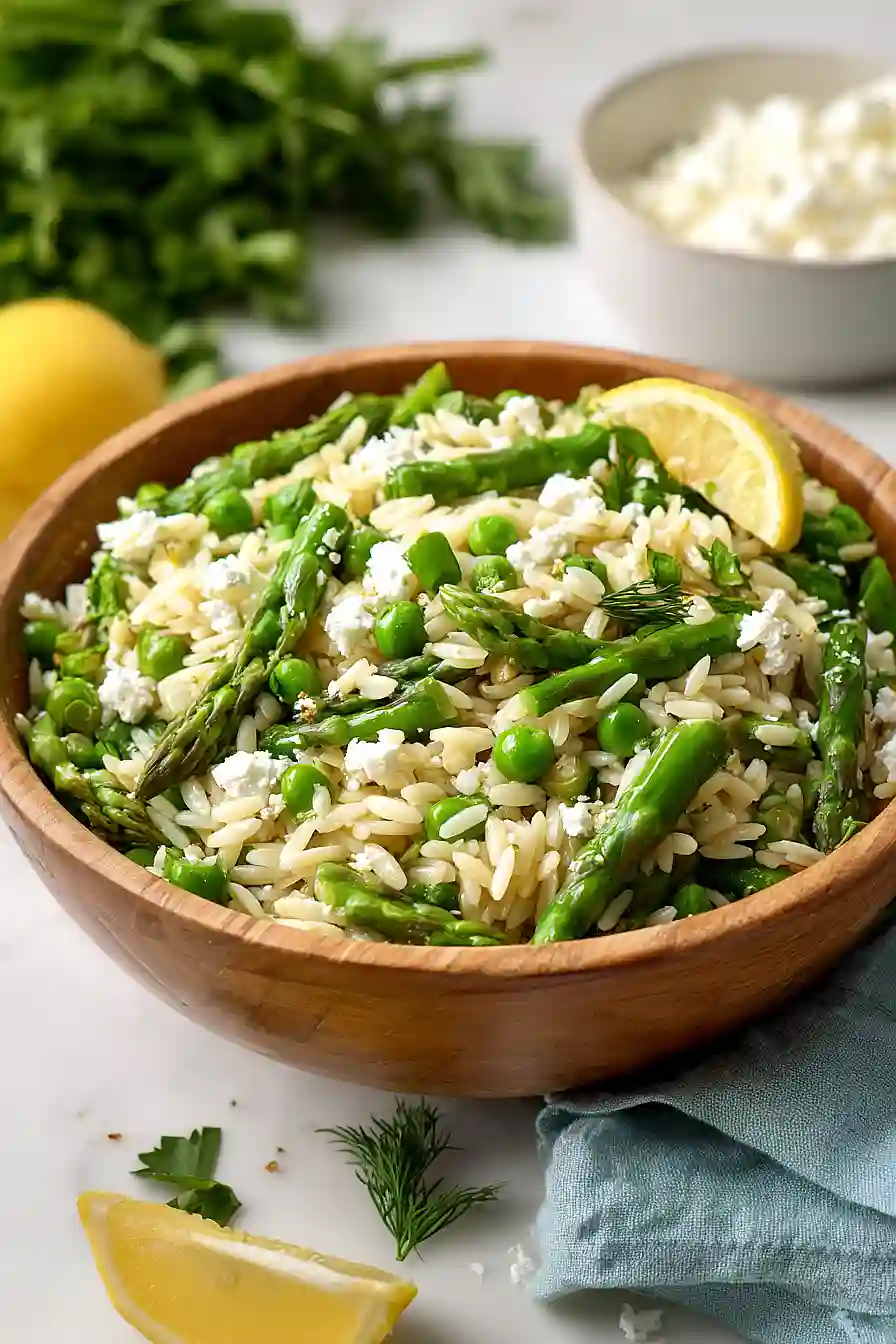
Options for Substitutions
This salad is pretty forgiving when it comes to swaps, so feel free to work with what you have:
- Orzo: You can replace orzo with other small pasta shapes like ditalini, acini di pepe, or even couscous. Cook according to package directions and adjust the water amount as needed.
- Asparagus: Green beans, snap peas, or even broccoli florets make great substitutes. Just blanch them the same way you would the asparagus to keep them crisp and bright.
- Peas: Frozen peas work just as well as fresh, or you can swap them for edamame or fava beans for a slightly different texture.
- Goat cheese: Not a fan of goat cheese? Try crumbled feta, ricotta salata, or even small mozzarella balls. Each will give you a different flavor profile but still add that creamy element.
- Balsamic vinegar: Red wine vinegar or white wine vinegar work well here. You might want to add a tiny pinch of sugar if using these to mimic balsamic’s slight sweetness.
- Parsley: Fresh basil, mint, or dill would all be tasty alternatives that pair nicely with spring vegetables.
Watch Out for These Mistakes While Cooking
Overcooking the asparagus and peas is the fastest way to ruin this salad – they only need 30 seconds in boiling water, so set a timer and have your ice bath ready to stop the cooking immediately and keep them crisp and bright green.
Another mistake is adding the goat cheese while the orzo is still warm, which causes it to melt into a gummy mess instead of staying in nice crumbles, so make sure the salad is completely chilled before stirring in the cheese.
Don’t skip the step of tossing the hot orzo with the dressing right after draining – the warm pasta absorbs the flavors much better than cold pasta, giving you a tastier final dish.
Finally, if your salad tastes bland after chilling, remember that cold foods need more seasoning than warm ones, so taste it again before serving and add extra salt, pepper, or a squeeze of lemon juice to brighten everything up.
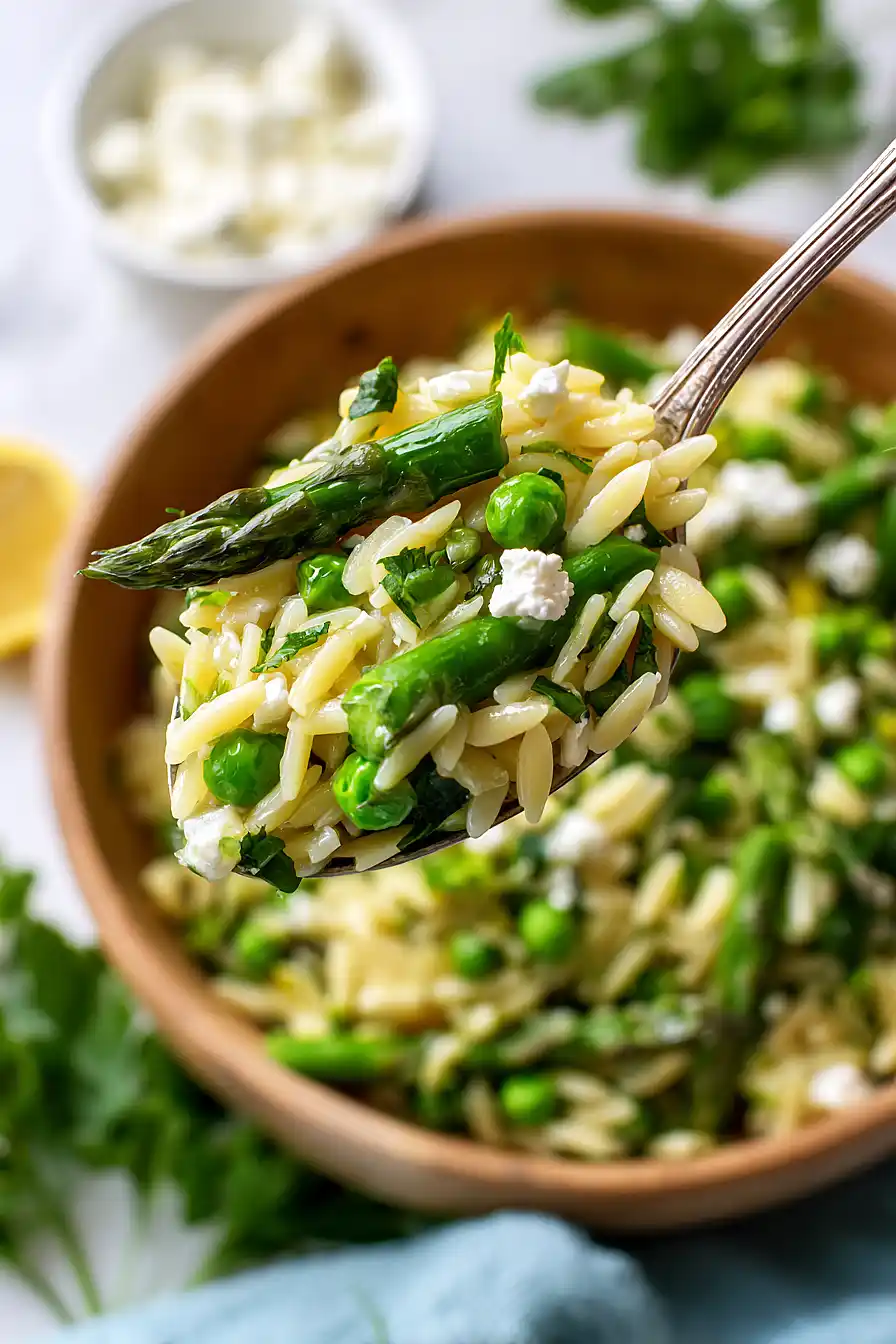
What to Serve With Asparagus and Pea Orzo Salad?
This orzo salad is pretty filling on its own, but it pairs beautifully with grilled chicken, salmon, or shrimp if you want to add some protein. I love serving it alongside grilled lemon herb chicken breasts or pan-seared salmon fillets for a complete spring meal. It also works great as a side dish at cookouts next to burgers or grilled sausages. Since the salad is already packed with fresh flavors, keep the main dish simple and let the bright, lemony orzo shine through.
Storage Instructions
Refrigerate: This orzo salad actually gets better after a day in the fridge as the flavors meld together. Store it in an airtight container for up to 4 days. If you’re meal prepping, I’d recommend keeping the goat cheese separate and adding it fresh when you’re ready to eat, so it stays nice and creamy.
Make Ahead: You can totally prep this salad a day or two in advance, which makes it perfect for potlucks or busy weeknights. Just give it a good stir before serving and add a splash of olive oil or lemon juice if it seems a bit dry after sitting in the fridge.
Serve: This salad is meant to be enjoyed cold or at room temperature, so just pull it out of the fridge about 15 minutes before serving if you want to take the chill off. It’s great for packed lunches too since you don’t need to worry about reheating it.
| Preparation Time | 15-20 minutes |
| Cooking Time | 20-25 minutes |
| Total Time | 175-225 minutes |
| Level of Difficulty | Easy |
| Servings | 5 servings |
Estimated Nutrition
Estimated nutrition for the whole recipe (without optional ingredients):
- Calories: 1200-1350
- Protein: 40-50 g
- Fat: 50-60 g
- Carbohydrates: 140-160 g
Ingredients
For the dressing:
- 2.5 tbsp olive oil (I prefer Lucini Premium Select for a peppery finish)
- 2.5 tbsp balsamic vinegar
- 1 large lemon (zested and juiced for maximum brightness)
- 1/4 cup finely minced red onion
- 3/4 tsp salt
- 1/2 tsp pepper
- 1/4 tsp dried dill
For the base:
- 4 cups water
- 8 oz orzo (I always use Barilla for the best al dente texture)
- 8 oz asparagus (trimmed and cut into 1-inch pieces)
- 1.5 cups peas
For the salad assembly:
- 1/2 cup chopped fresh parsley
- 8 oz goat cheese (crumbled while cold for better texture)
Step 1: Prepare the Dressing and Mise en Place
- 2.5 tbsp olive oil
- 2.5 tbsp balsamic vinegar
- 1 large lemon
- 1/4 cup finely minced red onion
- 3/4 tsp salt
- 1/2 tsp pepper
- 1/4 tsp dried dill
- 1/2 cup chopped fresh parsley
- 8 oz goat cheese
- 8 oz asparagus
While waiting for water to boil, prepare all your components so assembly moves quickly.
In a small bowl, whisk together the olive oil, balsamic vinegar, lemon zest, lemon juice, minced red onion, salt, pepper, and dried dill.
Set this dressing aside.
Finely chop the fresh parsley and crumble the goat cheese while it’s still cold—this prevents it from clumping together.
Trim the asparagus and cut into 1-inch pieces.
Having everything prepped and ready will make the cooking process seamless.
Step 2: Blanch the Vegetables and Shock in Ice Water
- 4 cups water
- 8 oz asparagus
- 1.5 cups peas
Bring 4 cups of salted water to a rolling boil in a large pot.
Add the asparagus pieces and peas, cooking for exactly 30 seconds—this brief blanch preserves their bright color and crisp-tender texture while removing any raw flavor.
Immediately transfer the vegetables to a bowl of ice water to stop the cooking process.
Once cooled, drain them well and set aside on paper towels to remove excess moisture, which prevents the salad from becoming watery.
Step 3: Cook and Season the Orzo
- 8 oz orzo
- dressing mixture from Step 1
In the same pot of water (no need to drain), bring back to a boil and add the orzo.
Cook according to package directions until al dente—I always use Barilla because it holds its texture perfectly and doesn’t become mushy.
Drain the orzo thoroughly and immediately transfer it to a large mixing bowl.
While the orzo is still hot, pour the prepared dressing from Step 1 over it and toss well to combine.
The heat helps the orzo absorb the flavors evenly, creating a more flavorful base.
Step 4: Chill the Orzo Base
- dressed orzo from Step 3
Cover the dressed orzo and refrigerate for 2-3 hours, or until completely chilled.
This resting time allows the flavors to meld together and the orzo to absorb the dressing fully, resulting in a more cohesive and flavorful salad.
You can prepare this step ahead of time—it’s actually better when made a few hours in advance.
Step 5: Assemble and Finish the Salad
- chilled orzo base from Step 4
- blanched vegetables from Step 2
- fresh parsley from Step 1
- crumbled goat cheese from Step 1
Remove the chilled orzo from the refrigerator and gently fold in the blanched asparagus and peas from Step 2, followed by the fresh parsley and crumbled goat cheese from Step 1.
Toss gently to combine, being careful not to break up the delicate goat cheese too much.
Taste and adjust seasoning if needed—the flavors should be bright and balanced, with the peppery olive oil and lemon providing a fresh finish.
Step 6: Serve
Transfer the salad to a serving dish or individual bowls and serve chilled or at room temperature, depending on your preference.
The salad can be made up to 1 day ahead and tastes even better the next day as the flavors continue to develop.
Easy Asparagus and Pea Orzo Salad
Ingredients
Method
- While waiting for water to boil, prepare all your components so assembly moves quickly. In a small bowl, whisk together the olive oil, balsamic vinegar, lemon zest, lemon juice, minced red onion, salt, pepper, and dried dill. Set this dressing aside. Finely chop the fresh parsley and crumble the goat cheese while it's still cold—this prevents it from clumping together. Trim the asparagus and cut into 1-inch pieces. Having everything prepped and ready will make the cooking process seamless.
- Bring 4 cups of salted water to a rolling boil in a large pot. Add the asparagus pieces and peas, cooking for exactly 30 seconds—this brief blanch preserves their bright color and crisp-tender texture while removing any raw flavor. Immediately transfer the vegetables to a bowl of ice water to stop the cooking process. Once cooled, drain them well and set aside on paper towels to remove excess moisture, which prevents the salad from becoming watery.
- In the same pot of water (no need to drain), bring back to a boil and add the orzo. Cook according to package directions until al dente—I always use Barilla because it holds its texture perfectly and doesn't become mushy. Drain the orzo thoroughly and immediately transfer it to a large mixing bowl. While the orzo is still hot, pour the prepared dressing from Step 1 over it and toss well to combine. The heat helps the orzo absorb the flavors evenly, creating a more flavorful base.
- Cover the dressed orzo and refrigerate for 2-3 hours, or until completely chilled. This resting time allows the flavors to meld together and the orzo to absorb the dressing fully, resulting in a more cohesive and flavorful salad. You can prepare this step ahead of time—it's actually better when made a few hours in advance.
- Remove the chilled orzo from the refrigerator and gently fold in the blanched asparagus and peas from Step 2, followed by the fresh parsley and crumbled goat cheese from Step 1. Toss gently to combine, being careful not to break up the delicate goat cheese too much. Taste and adjust seasoning if needed—the flavors should be bright and balanced, with the peppery olive oil and lemon providing a fresh finish.
- Transfer the salad to a serving dish or individual bowls and serve chilled or at room temperature, depending on your preference. The salad can be made up to 1 day ahead and tastes even better the next day as the flavors continue to develop.