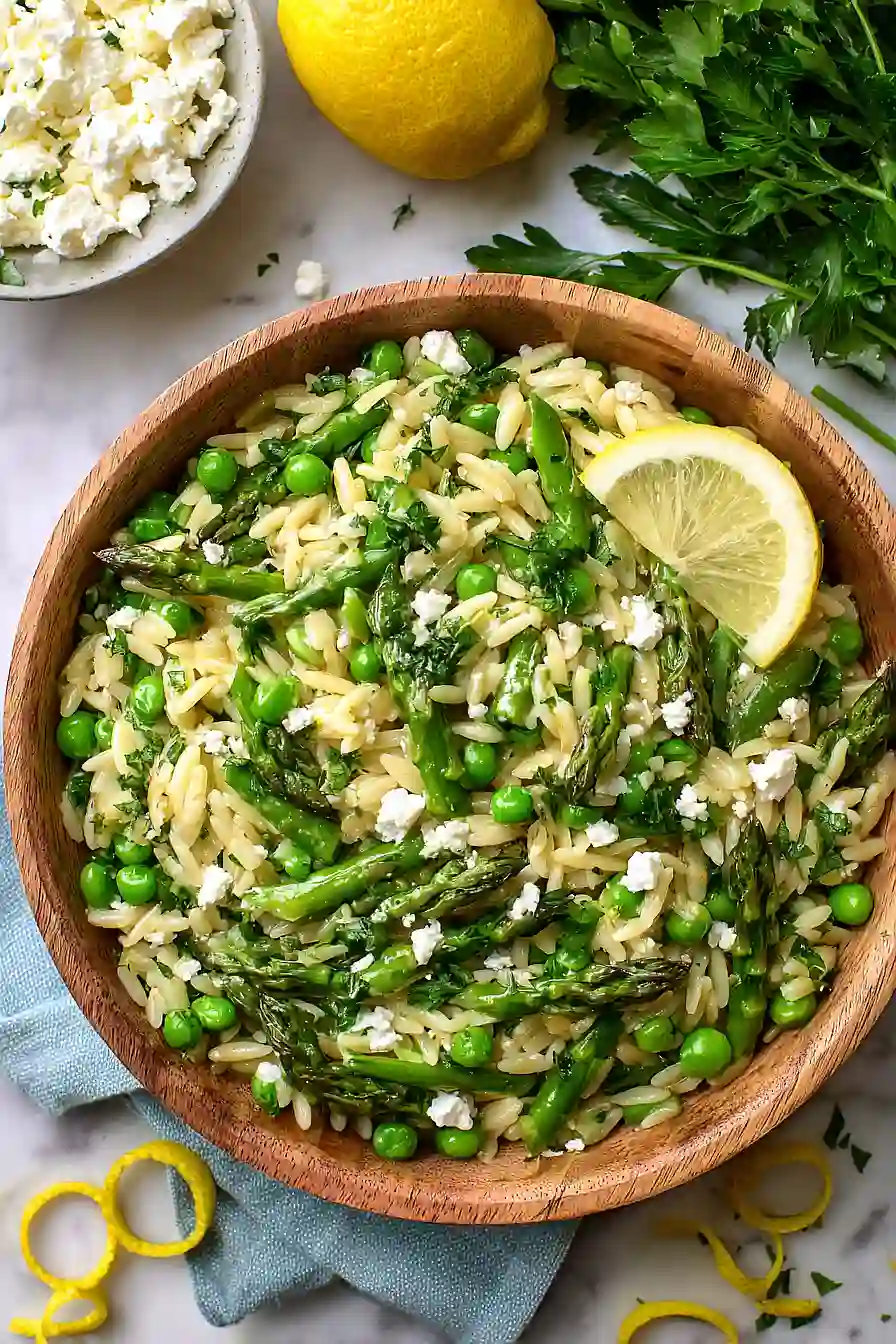
While waiting for water to boil, prepare all your components so assembly moves quickly. In a small bowl, whisk together the olive oil, balsamic vinegar, lemon zest, lemon juice, minced red onion, salt, pepper, and dried dill. Set this dressing aside. Finely chop the fresh parsley and crumble the goat cheese while it's still cold—this prevents it from clumping together. Trim the asparagus and cut into 1-inch pieces. Having everything prepped and ready will make the cooking process seamless.
Bring 4 cups of salted water to a rolling boil in a large pot. Add the asparagus pieces and peas, cooking for exactly 30 seconds—this brief blanch preserves their bright color and crisp-tender texture while removing any raw flavor. Immediately transfer the vegetables to a bowl of ice water to stop the cooking process. Once cooled, drain them well and set aside on paper towels to remove excess moisture, which prevents the salad from becoming watery.
In the same pot of water (no need to drain), bring back to a boil and add the orzo. Cook according to package directions until al dente—I always use Barilla because it holds its texture perfectly and doesn't become mushy. Drain the orzo thoroughly and immediately transfer it to a large mixing bowl. While the orzo is still hot, pour the prepared dressing from Step 1 over it and toss well to combine. The heat helps the orzo absorb the flavors evenly, creating a more flavorful base.
Cover the dressed orzo and refrigerate for 2-3 hours, or until completely chilled. This resting time allows the flavors to meld together and the orzo to absorb the dressing fully, resulting in a more cohesive and flavorful salad. You can prepare this step ahead of time—it's actually better when made a few hours in advance.
Remove the chilled orzo from the refrigerator and gently fold in the blanched asparagus and peas from Step 2, followed by the fresh parsley and crumbled goat cheese from Step 1. Toss gently to combine, being careful not to break up the delicate goat cheese too much. Taste and adjust seasoning if needed—the flavors should be bright and balanced, with the peppery olive oil and lemon providing a fresh finish.
Transfer the salad to a serving dish or individual bowls and serve chilled or at room temperature, depending on your preference. The salad can be made up to 1 day ahead and tastes even better the next day as the flavors continue to develop.