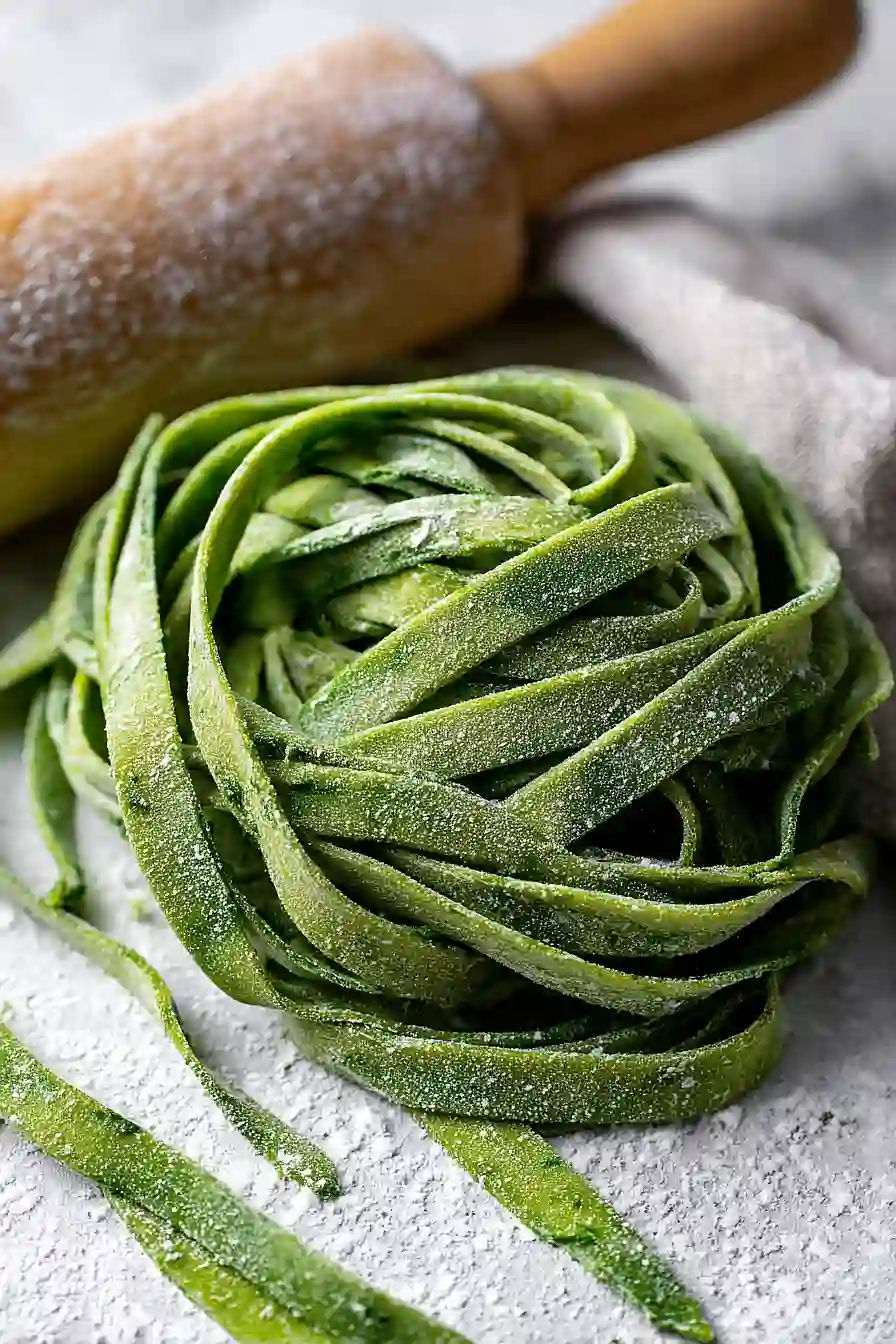
Here is my favorite spinach pasta dough recipe, with just four simple ingredients – flour, fresh spinach, olive oil, and salt – that come together to make beautiful green pasta from scratch.
This homemade pasta is one of those recipes that looks impressive but is actually pretty easy to make. My kids love helping me roll it out, and we usually turn it into fettuccine or ravioli for a fun weekend dinner.
Why You’ll Love This Spinach Pasta Dough
- Just two ingredients – You only need flour and spinach to make this beautiful homemade pasta, which means less shopping and less fuss in the kitchen.
- Sneaky way to add greens – If you’re trying to eat more vegetables or have picky eaters at home, this pasta naturally incorporates spinach without any strong flavor.
- Fun weekend project – Making pasta from scratch is easier than you think and makes for a relaxing activity, plus you’ll feel accomplished when you serve it for dinner.
- Impressive presentation – The natural green color from the spinach makes your pasta look restaurant-quality without any artificial dyes or complicated techniques.
What Kind of Spinach Should I Use?
For this pasta dough, you’ll want to use fresh spinach rather than frozen, as it gives you better control over the moisture content. Baby spinach works great because the leaves are tender and blend smoothly, but regular spinach works just fine too – just remove any thick stems before cooking. You’ll need to cook the spinach down first (it’ll shrink quite a bit), then squeeze out as much water as possible before adding it to your dough. The drier you can get your cooked spinach, the better your pasta dough will come together without being sticky.
Options for Substitutions
While pasta dough is pretty straightforward, here are a few swaps you can make:
- All-purpose flour: You can use bread flour for a chewier texture, or try a mix of all-purpose and semolina flour (half and half) for a more traditional Italian pasta. Whole wheat flour works too, but use about 75% whole wheat and 25% all-purpose to keep the dough workable.
- Fresh spinach: Frozen spinach works great here – just make sure to thaw it completely and squeeze out as much water as possible using a clean kitchen towel or cheesecloth. You’ll need about 100-120g of frozen spinach to equal 150g fresh after cooking and draining.
- Spinach: Want to try other greens? Kale, chard, or even fresh herbs like basil work well. Just blanch them first, squeeze out the water, and blend until smooth before adding to your flour.
Watch Out for These Mistakes While Cooking
The biggest mistake when making spinach pasta is adding too much moisture from the spinach, which can turn your dough into a sticky, unworkable mess – always squeeze out excess water from the spinach after blanching or use frozen spinach that’s been thoroughly drained and patted dry.
Another common error is not kneading the dough enough after forming it into a ball, so spend at least 5-7 minutes working it until it’s smooth and elastic, which helps develop the gluten for pasta that holds together during cooking.
When rolling through the pasta machine, avoid the temptation to skip settings or rush the process – gradually moving from the widest to thinner settings ensures even thickness and prevents tearing.
Finally, fresh pasta cooks much faster than dried, so keep a close eye on it and start checking for doneness after just 2-3 minutes of boiling, as overcooking will leave you with mushy noodles instead of tender pasta with a slight bite.
What to Serve With Spinach Pasta?
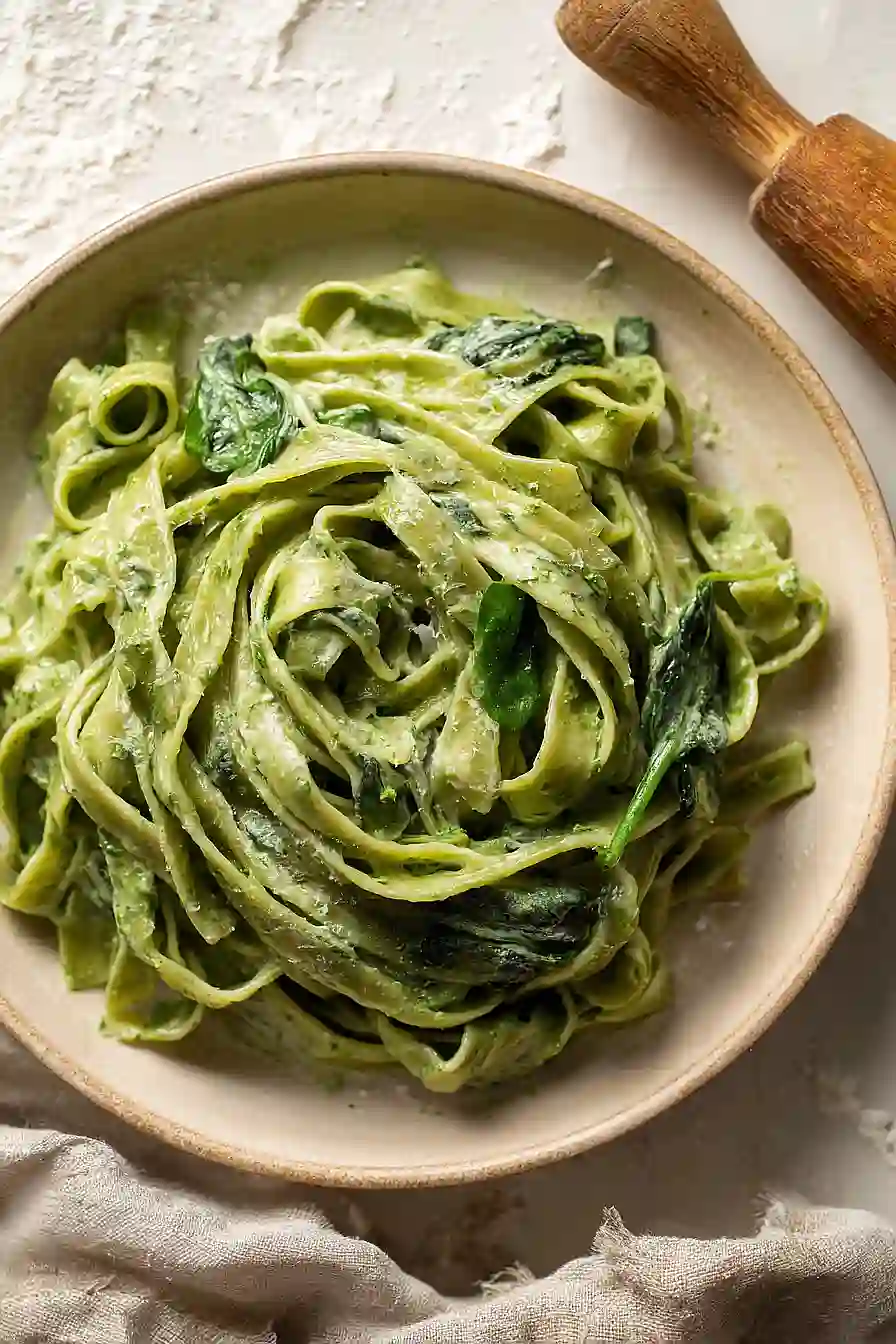
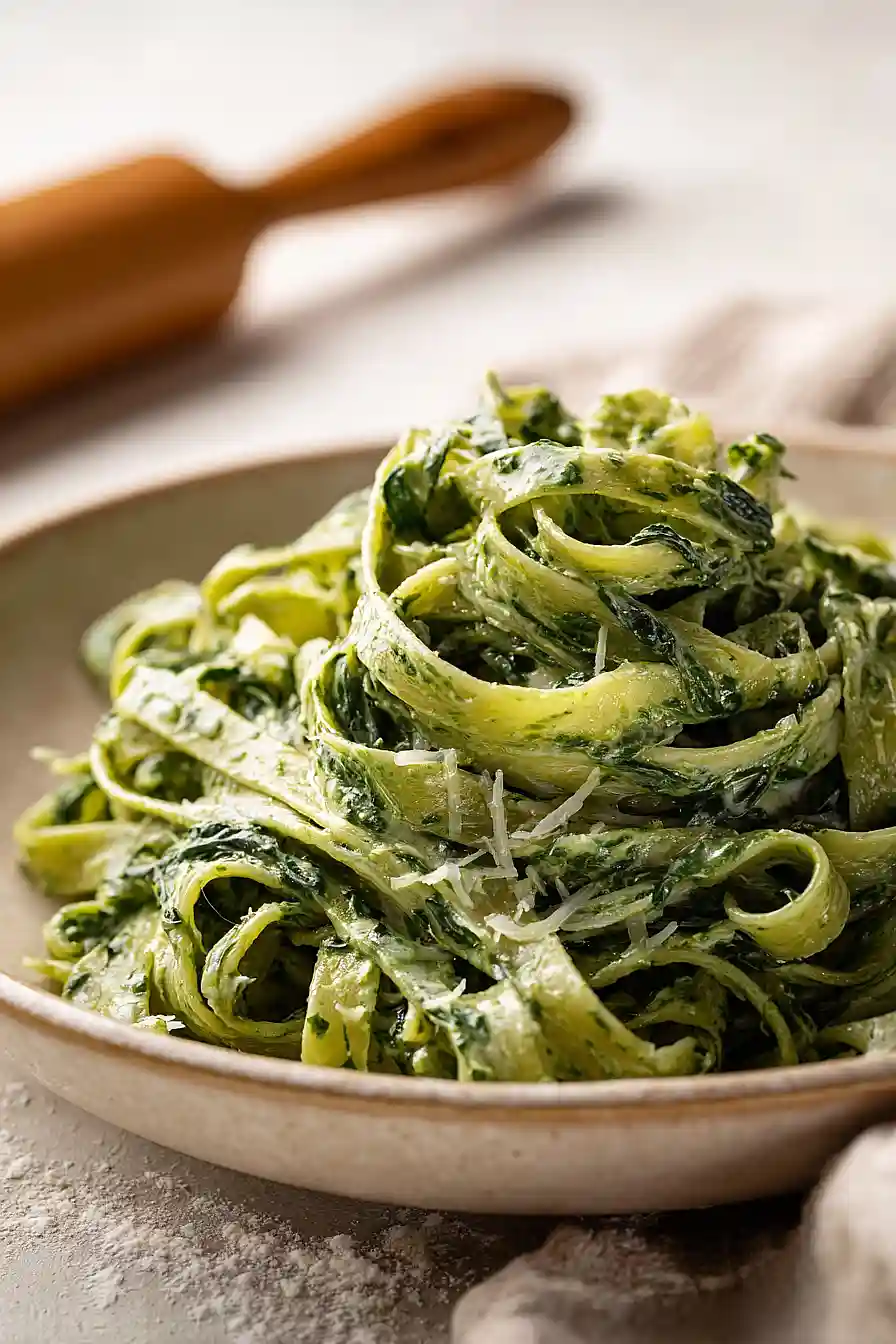
Fresh spinach pasta is beautiful on its own, so I like to keep the sauce simple – a classic brown butter sage sauce or a light garlic and olive oil situation really lets the pasta shine. If you want something heartier, toss it with a creamy alfredo or a simple tomato sauce with fresh basil. A side of garlic bread and a crisp Caesar salad rounds out the meal nicely, and don’t forget to grate plenty of parmesan cheese on top right before serving.
Storage Instructions
Store: If you’re not using your spinach pasta dough right away, wrap it tightly in plastic wrap and keep it in the fridge for up to 2 days. Make sure it’s wrapped well so it doesn’t dry out or form a crust on the surface.
Freeze: This dough freezes really well for up to 3 months. Just wrap it tightly in plastic wrap, then put it in a freezer bag. When you’re ready to use it, let it thaw in the fridge overnight before rolling it out.
Use: Once you’ve rolled and cut your pasta, you can cook it right away or let it dry for about 30 minutes on a floured surface. If you want to store the cut pasta, dust it well with flour and keep it in an airtight container in the fridge for a day or two.
| Preparation Time | 45-60 minutes |
| Cooking Time | 5-10 minutes |
| Total Time | 50-70 minutes |
| Level of Difficulty | Medium |
| Servings | 4 servings |
Estimated Nutrition
Estimated nutrition for the whole recipe (without optional ingredients):
- Calories: 1050-1150
- Protein: 33-37 g
- Fat: 2-4 g
- Carbohydrates: 215-225 g
Ingredients
- 11 oz King Arthur all-purpose flour
- 5.3 oz spinach
- 1/4 teaspoon salt
- 1 tablespoon olive oil
Step 1: Blend Spinach and Flour to Create the Base
- 11 oz King Arthur all-purpose flour
- 5.3 oz spinach
Add the spinach and all-purpose flour to a food processor and blend until the mixture resembles coarse breadcrumbs with no large spinach pieces remaining.
This breaks down the spinach fibers and distributes its moisture and color evenly throughout the flour, which is essential for achieving uniform green color and proper hydration in your pasta dough.
Step 2: Form and Rest the Dough
- spinach-flour mixture from Step 1
- 1/4 teaspoon salt
- 1 tablespoon olive oil
Transfer the spinach-flour mixture to a bowl, add the salt and olive oil, and mix with your hands until a shaggy dough forms.
Bring it together into a rough ball, then cover and refrigerate for 15 minutes.
This rest period allows the flour to fully hydrate and helps relax the gluten, making the dough easier to roll through the pasta machine without tearing.
Step 3: Divide and Begin Rolling Out the Pasta
- rested dough from Step 2
Remove the dough from the fridge and cut it into 4 equal pieces.
Working with one piece at a time, dust your work surface lightly with flour and flatten the dough into a rough rectangle with your hands.
Feed it through your pasta machine set at the widest setting, then fold it in half and roll it through 2-3 times.
I like to fold and re-roll a few times at the widest setting because it really helps develop the dough’s elasticity and creates a smoother final texture.
Step 4: Thin the Dough to Final Thickness
- partially rolled dough from Step 3
Gradually tighten the pasta machine rollers and feed the dough through, working up one setting at a time, until it reaches approximately 2 mm thickness.
You should be able to see light through the sheet when held up to a window.
This gradual thinning prevents the dough from tearing and ensures even thickness for consistent cooking.
Step 5: Cut Noodles and Repeat for Remaining Dough
- thinned dough from Step 4
Cut the thin pasta sheet into 5 mm wide noodles using your pasta machine’s cutting attachment or by hand with a knife.
Lay the cut noodles on a lightly floured surface to dry for at least 10 minutes before cooking.
Repeat Steps 3-5 with the remaining three pieces of dough.
I find that letting the cut pasta air-dry for a bit prevents it from sticking together and gives you more control when cooking.
Step 6: Cook and Serve
- cut noodles from Step 5
Bring a large pot of salted water to a boil.
Add the fresh spinach pasta and cook for approximately 5 minutes, or until the noodles float to the surface and are tender but still slightly firm to the bite.
Drain immediately and serve with your desired sauce.
Homemade Spinach Pasta Dough
Ingredients
Method
- Add the spinach and all-purpose flour to a food processor and blend until the mixture resembles coarse breadcrumbs with no large spinach pieces remaining. This breaks down the spinach fibers and distributes its moisture and color evenly throughout the flour, which is essential for achieving uniform green color and proper hydration in your pasta dough.
- Transfer the spinach-flour mixture to a bowl, add the salt and olive oil, and mix with your hands until a shaggy dough forms. Bring it together into a rough ball, then cover and refrigerate for 15 minutes. This rest period allows the flour to fully hydrate and helps relax the gluten, making the dough easier to roll through the pasta machine without tearing.
- Remove the dough from the fridge and cut it into 4 equal pieces. Working with one piece at a time, dust your work surface lightly with flour and flatten the dough into a rough rectangle with your hands. Feed it through your pasta machine set at the widest setting, then fold it in half and roll it through 2-3 times. I like to fold and re-roll a few times at the widest setting because it really helps develop the dough's elasticity and creates a smoother final texture.
- Gradually tighten the pasta machine rollers and feed the dough through, working up one setting at a time, until it reaches approximately 2 mm thickness. You should be able to see light through the sheet when held up to a window. This gradual thinning prevents the dough from tearing and ensures even thickness for consistent cooking.
- Cut the thin pasta sheet into 5 mm wide noodles using your pasta machine's cutting attachment or by hand with a knife. Lay the cut noodles on a lightly floured surface to dry for at least 10 minutes before cooking. Repeat Steps 3-5 with the remaining three pieces of dough. I find that letting the cut pasta air-dry for a bit prevents it from sticking together and gives you more control when cooking.
- Bring a large pot of salted water to a boil. Add the fresh spinach pasta and cook for approximately 5 minutes, or until the noodles float to the surface and are tender but still slightly firm to the bite. Drain immediately and serve with your desired sauce.