Buddha bowls have become my weeknight dinner solution when I want something that feels healthy but still satisfies everyone at the table. I love that I can prep all the components ahead of time and just assemble them when dinner rolls around. Plus, there’s something about eating from a bowl that makes the meal feel more relaxed.
This Thai chicken version hits all the right notes with tender chicken, crunchy vegetables, and a creamy peanut sauce that ties everything together. The farro adds a nice chewy texture that holds up better than rice, and the fresh herbs make it taste bright and interesting. It’s the kind of meal that looks like you spent hours in the kitchen, but really just takes some simple chopping and a quick sauté.
Want extra crunch? Add more peanuts. Not a fan of spice? Go easy on the sambal oelek. That’s the beauty of buddha bowls—they’re forgiving and easy to customize based on what you have or what you’re craving.
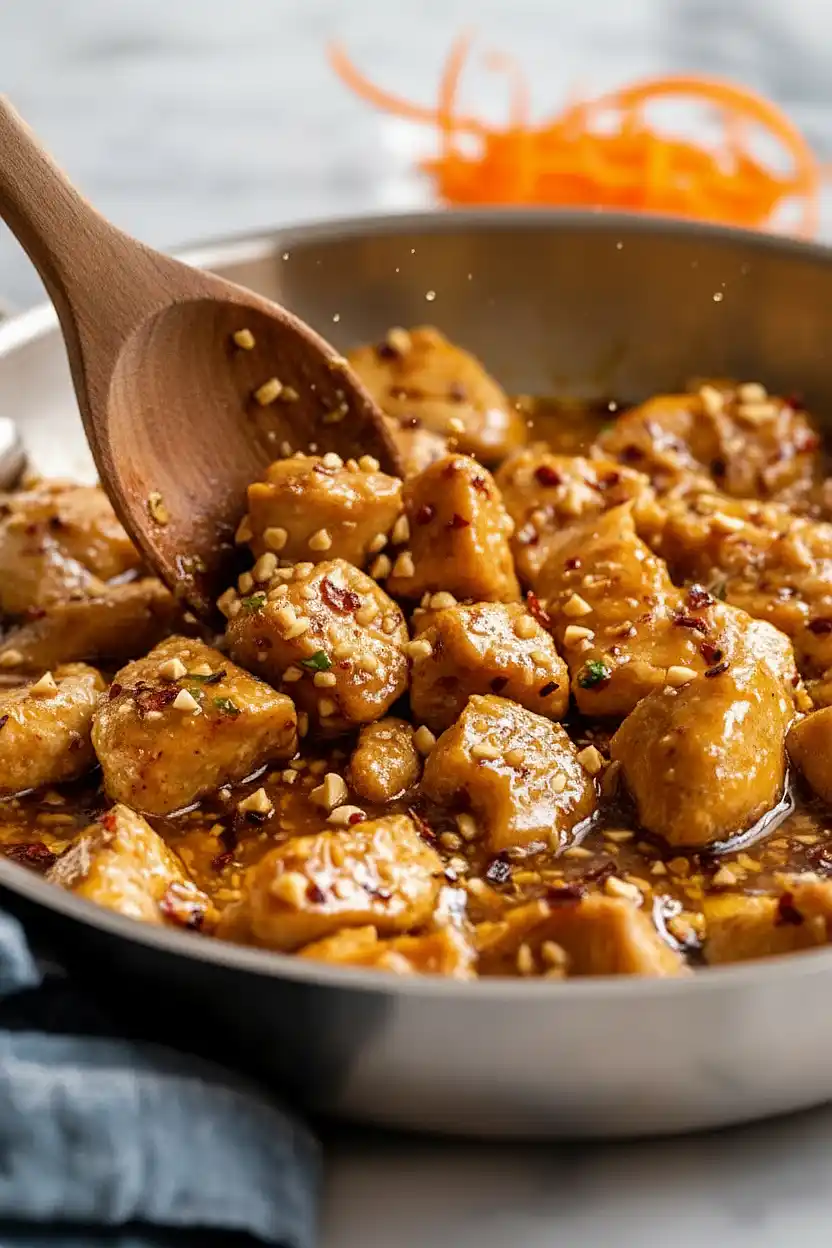
Why You’ll Love These Thai Chicken Buddha Bowls
- Quick weeknight dinner – Ready in under 40 minutes, this recipe is perfect for busy evenings when you want something healthy without spending hours in the kitchen.
- Packed with nutrients – Between the farro, fresh vegetables, and lean chicken thighs, you’re getting a well-rounded meal with protein, whole grains, and plenty of veggies in every bite.
- Bold, restaurant-quality flavors – The combination of sambal oelek, ginger, garlic, and a creamy peanut sauce brings authentic Thai-inspired taste right to your table.
- Customizable and meal-prep friendly – You can easily swap vegetables based on what you have on hand, and the components store well separately for make-ahead lunches throughout the week.
What Kind of Chicken Should I Use?
This recipe calls for boneless, skinless chicken thighs, which are my go-to for Buddha bowls because they stay moist and flavorful even after cooking. If you prefer white meat, you can absolutely swap in chicken breasts instead, just keep an eye on them so they don’t dry out. Either way, make sure to cut your chicken into evenly-sized chunks so everything cooks at the same rate. Fresh chicken works best here, but if you’re using frozen, just thaw it completely in the fridge overnight and pat it dry before cutting to help it brown nicely in the pan.
Options for Substitutions
This recipe is pretty forgiving when it comes to swaps, so feel free to work with what you have:
- Farro: You can easily swap farro for brown rice, quinoa, or even cauliflower rice if you’re going low-carb. Cook times will vary – quinoa takes about 15 minutes, while brown rice needs closer to 40 minutes.
- Chicken thighs: Chicken breasts work fine here, though they’ll be a bit leaner. You could also use shrimp or tofu – just adjust the cooking time accordingly (shrimp cooks in 3-4 minutes, firm tofu in about 5-6 minutes).
- Sambal oelek: If you don’t have sambal oelek, sriracha is a solid substitute. You can also use red pepper flakes (start with 1/2 teaspoon and adjust) or any Asian chili sauce you have on hand.
- Fish sauce: Soy sauce or tamari can replace fish sauce in equal amounts. The flavor will be slightly different but still tasty.
- Purple cabbage: Regular green cabbage works just as well. You could also use shredded Brussels sprouts or more kale.
- Bean sprouts: These add crunch but aren’t essential. Skip them or use thinly sliced cucumber or snap peas instead.
- Roasted peanuts: Cashews or almonds make great substitutes. For nut-free, try roasted sunflower seeds or just leave them off entirely.
Watch Out for These Mistakes While Cooking
The biggest mistake with this recipe is overcooking the chicken thighs, which can make them tough and dry – pull them from the heat when they’re just cooked through since they’ll continue cooking in the residual heat.
Don’t skip coating the chicken with cornstarch, as this step creates a light crust that helps the sauce cling better and adds texture to your bowl.
When cooking the garlic, shallot, and ginger, watch them carefully during those 2 minutes because they can burn quickly and turn bitter, ruining the flavor of your entire dish.
For the best results, make sure your peanut sauce has the right consistency by adding water gradually – it should be pourable but not watery, and you can always thin it out more if needed when serving.
What to Serve With Thai Chicken Buddha Bowls?
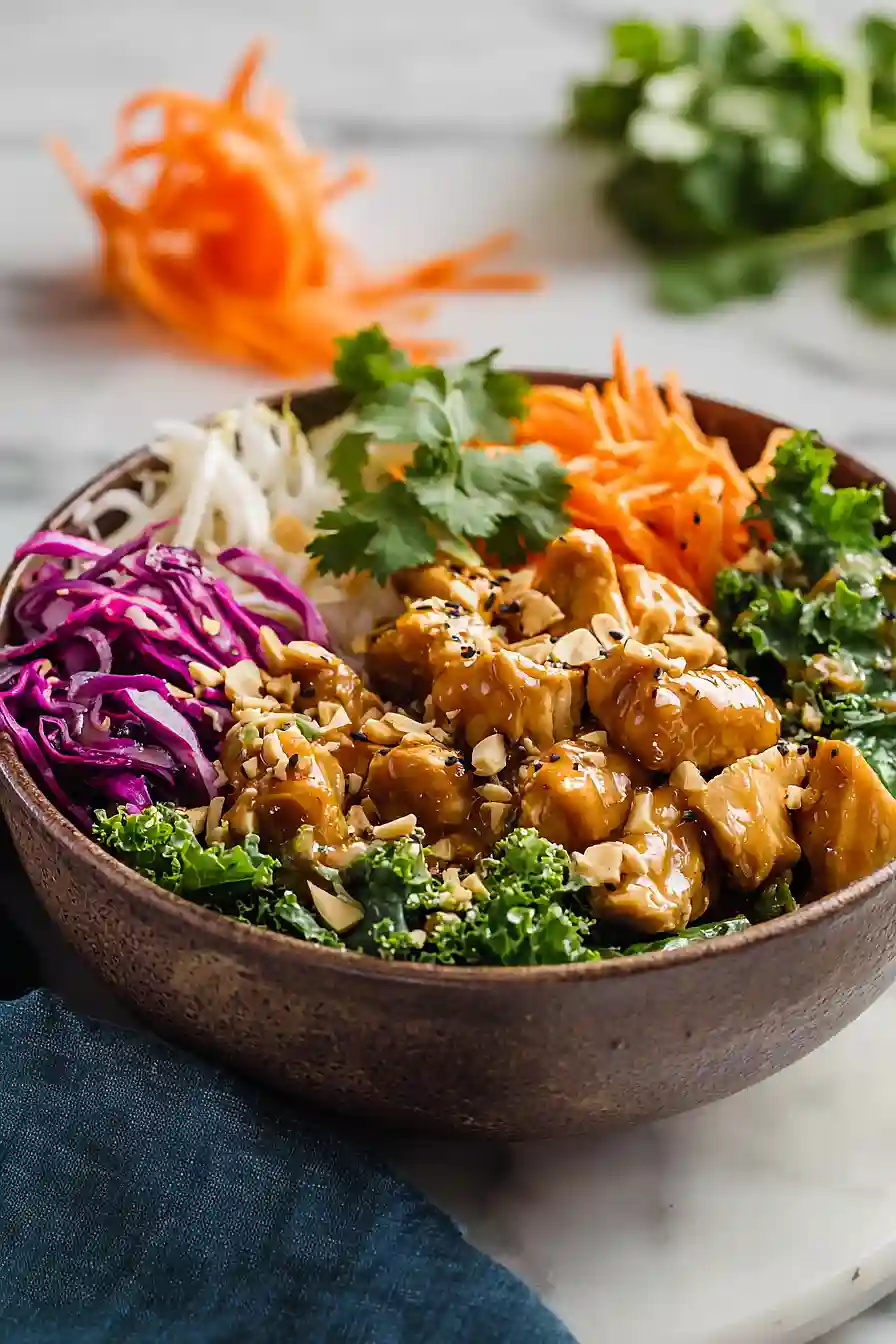
These buddha bowls are pretty filling on their own, but I love serving them with some crispy spring rolls or vegetable dumplings on the side for extra crunch. A simple cucumber salad with rice vinegar and sesame seeds is a nice refreshing addition that helps balance out the spicy peanut flavors. If you’re feeding a crowd, consider setting out some extra lime wedges, sriracha, and crushed peanuts so everyone can customize their bowls to their liking. You could also add some edamame or sliced avocado right on top of the bowl for extra protein and creaminess.
Storage Instructions
Store: These buddha bowls are great for meal prep! Keep the components separate in airtight containers in the fridge for up to 4 days. Store the chicken, farro, and veggies in different containers so everything stays fresh and crisp. The peanut sauce can be stored separately in a small jar or container.
Make Ahead: You can cook the farro and chicken up to 3 days in advance to save time during the week. Prep your veggies and store them in the fridge, then just assemble the bowls when you’re ready to eat. The peanut sauce actually tastes better after sitting for a day, so feel free to make it ahead too.
Serve: When you’re ready to eat, you can enjoy your buddha bowl cold or warm up the chicken and farro in the microwave for about 1-2 minutes. Add the fresh veggies and drizzle with the peanut sauce right before serving for the best texture and flavor.
| Preparation Time | 20-30 minutes |
| Cooking Time | 5-10 minutes |
| Total Time | 25-40 minutes |
| Level of Difficulty | Medium |
| Servings | 4 servings |
Estimated Nutrition
Estimated nutrition for the whole recipe (without optional ingredients):
- Calories: 1400-1600
- Protein: 80-95 g
- Fat: 50-65 g
- Carbohydrates: 150-175 g
Ingredients
For the base:
- 1 cup farro (I always use Bob’s Red Mill pearled farro for better texture)
- 2 cups kale
- 1 1/2 cups cabbage (shredded into thin 1/8-inch ribbons)
- 1 cup bean sprouts
- 2 carrots (peeled and julienned into 2-inch matchsticks)
- 1/2 cup cilantro
- 1/3 cup peanuts
For the chicken:
- 1 lb chicken thighs (cut into 1-inch bite-sized chunks)
- 1 1/2 tbsp cornstarch
- 1 tbsp fish sauce (I use Red Boat for its pure umami flavor)
- 1 tsp toasted sesame oil
- 1 tbsp olive oil
- 3 garlic cloves
- 1 shallot
- 1 tbsp ginger
- salt
- black pepper
For the pan sauce:
- 1/4 cup chicken stock (I prefer Swanson unsalted to control the saltiness)
- 1 1/2 tbsp sambal oelek
- 1 tbsp brown sugar
- 1 tbsp lime juice
- 1 tsp rice vinegar
For the peanut dressing:
- 4 tbsp peanut butter (I use Jif creamy for a smoother consistency)
- 2 tbsp lime juice
- 1 1/2 tbsp soy sauce
- 2 tsp brown sugar
- 2 tsp sambal oelek
Step 1: Prepare All Vegetables and Aromatics
- 2 carrots
- 1 1/2 cups cabbage
- 2 cups kale
- 3 garlic cloves
- 1 shallot
- 1 tbsp ginger
- 1/2 cup cilantro
While the farro cooks (see Step 2), prepare all your vegetables for maximum efficiency.
Peel and julienne the carrots into 2-inch matchsticks, shred the cabbage into thin 1/8-inch ribbons, and roughly chop the kale into bite-sized pieces.
Mince the garlic cloves, slice the shallot thinly, and mince the ginger.
Roughly chop the cilantro and set aside separately.
Having everything prepped before cooking the chicken ensures you can move quickly once the pan is hot, which is crucial for proper browning and flavor development.
Step 2: Cook the Farro and Make Both Sauces
- 1 cup farro
- 4 tbsp peanut butter
- 2 tbsp lime juice
- 1 1/2 tbsp soy sauce
- 2 tsp brown sugar
- 2 tsp sambal oelek
- 1/4 cup chicken stock
- 1 1/2 tbsp sambal oelek
- 1 tbsp brown sugar
- 1 tbsp lime juice
Start cooking the farro according to package directions in a separate pot—this typically takes 30-40 minutes and can happen simultaneously with other prep work.
While the farro cooks, make the peanut sauce by whisking together peanut butter, 2 tbsp lime juice, soy sauce, 2 tsp brown sugar, 2 tsp sambal oelek, and 2-3 tablespoons of water until smooth and drizzleable.
In a separate bowl, prepare the chicken cooking liquid by combining chicken stock, 1 1/2 tbsp sambal oelek, 1 tbsp brown sugar, and 1 tbsp lime juice.
Set both sauces aside.
I like to make the peanut sauce slightly thinner than I want it served, as it will thicken slightly as it sits—this prevents a heavy, pasty sauce.
Step 3: Season and Coat the Chicken
- 1 lb chicken thighs
- 1 1/2 tbsp cornstarch
- 1 tbsp fish sauce
- salt
- black pepper
While waiting for the farro to finish, prepare the chicken for cooking.
In a bowl, combine the chicken thigh chunks with cornstarch, fish sauce, salt, and black pepper, tossing until every piece is evenly coated.
The cornstarch creates a light crust that helps the chicken brown beautifully and adds textural contrast, while the fish sauce brings deep umami that amplifies the Thai flavors without making the dish taste fishy.
Step 4: Sear the Chicken and Build the Base
- chicken from Step 3
- 1 tbsp olive oil
- garlic, shallot, and ginger from Step 1
Heat olive oil in a large skillet over medium-high heat until shimmering.
Add the coated chicken from Step 3 and cook for 3-5 minutes, stirring occasionally, until the chicken is golden and mostly cooked through.
Don’t overcrowd the pan—if needed, cook in two batches to ensure proper browning.
Once the chicken is nearly cooked, reduce heat to medium, add the prepared garlic, shallot, and ginger from Step 1, and sauté for 2 minutes until fragrant.
Step 5: Finish the Chicken with Sauce
- cooked chicken and aromatics from Step 4
- stock mixture from Step 2
Pour the stock mixture from Step 2 into the pan with the chicken and aromatics, stirring constantly for about 1 minute to deglaze the pan and coat everything evenly.
The sauce will thicken slightly as it coats the chicken.
Taste and adjust seasoning with salt and pepper as needed.
The chicken should be fully cooked through and glazed with the savory, slightly spicy sauce.
Step 6: Assemble the Buddha Bowls
- cooked farro from Step 2
- cooked chicken from Step 5
- prepared vegetables from Step 1
- 1 cup bean sprouts
- 1/3 cup peanuts
Divide the cooked farro from Step 2 among serving bowls as your base.
Top each bowl with a portion of the cooked chicken and sauce from Step 5.
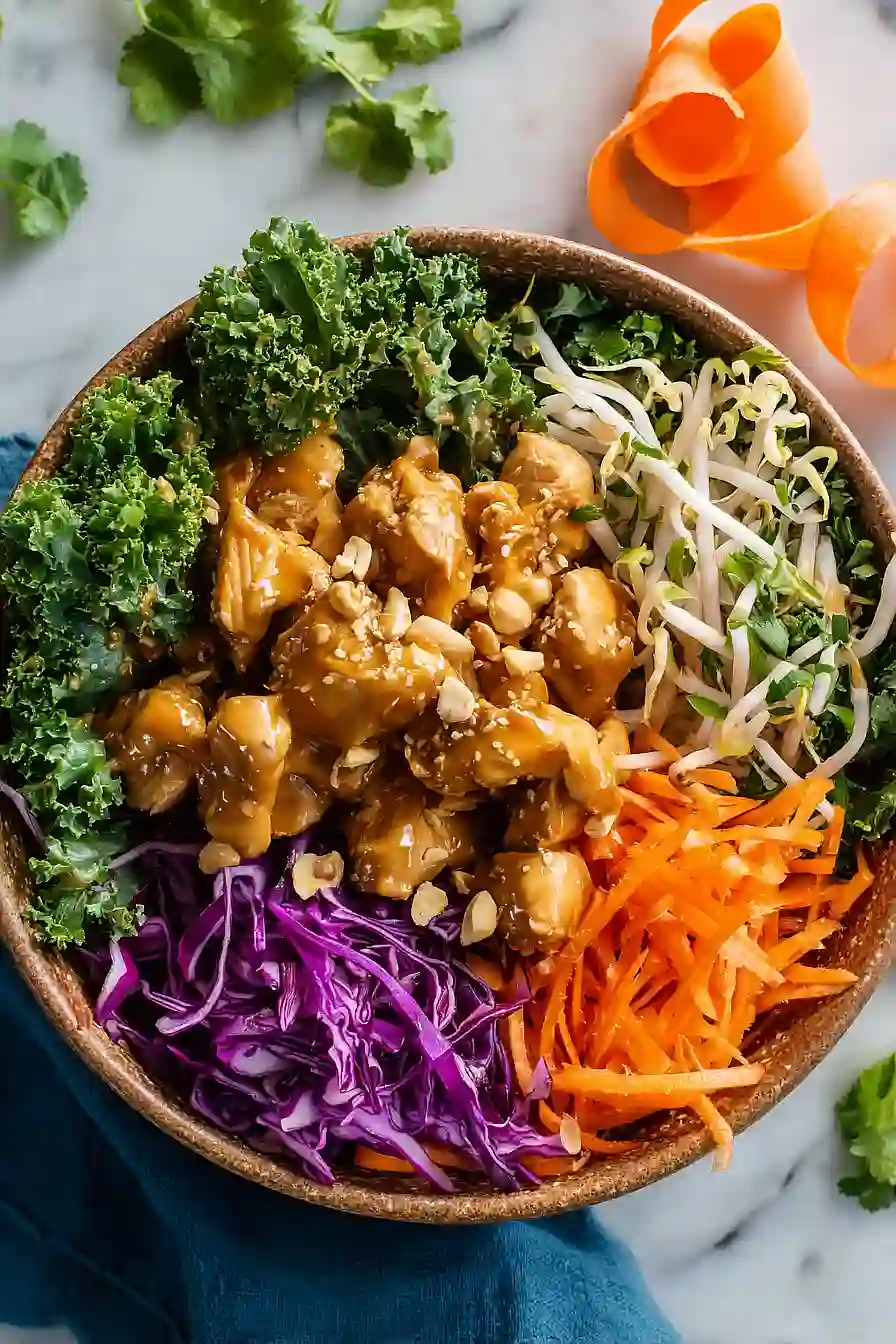
Arrange the fresh vegetables from Step 1 around the chicken—kale, cabbage, sprouts, and carrots—creating visual appeal with the different colors and textures.
Sprinkle with fresh cilantro and crushed peanuts as the final garnish.
Step 7: Serve with Peanut Sauce
- peanut sauce from Step 2
Drizzle the peanut sauce from Step 2 over each bowl just before serving, or serve it on the side so diners can control how much they add.
The warm chicken and farro pair beautifully with the cool, fresh vegetables and rich peanut sauce.
Mouthwatering Thai Chicken Buddha Bowls
Ingredients
Method
- While the farro cooks (see Step 2), prepare all your vegetables for maximum efficiency. Peel and julienne the carrots into 2-inch matchsticks, shred the cabbage into thin 1/8-inch ribbons, and roughly chop the kale into bite-sized pieces. Mince the garlic cloves, slice the shallot thinly, and mince the ginger. Roughly chop the cilantro and set aside separately. Having everything prepped before cooking the chicken ensures you can move quickly once the pan is hot, which is crucial for proper browning and flavor development.
- Start cooking the farro according to package directions in a separate pot—this typically takes 30-40 minutes and can happen simultaneously with other prep work. While the farro cooks, make the peanut sauce by whisking together peanut butter, 2 tbsp lime juice, soy sauce, 2 tsp brown sugar, 2 tsp sambal oelek, and 2-3 tablespoons of water until smooth and drizzleable. In a separate bowl, prepare the chicken cooking liquid by combining chicken stock, 1 1/2 tbsp sambal oelek, 1 tbsp brown sugar, and 1 tbsp lime juice. Set both sauces aside. I like to make the peanut sauce slightly thinner than I want it served, as it will thicken slightly as it sits—this prevents a heavy, pasty sauce.
- While waiting for the farro to finish, prepare the chicken for cooking. In a bowl, combine the chicken thigh chunks with cornstarch, fish sauce, salt, and black pepper, tossing until every piece is evenly coated. The cornstarch creates a light crust that helps the chicken brown beautifully and adds textural contrast, while the fish sauce brings deep umami that amplifies the Thai flavors without making the dish taste fishy.
- Heat olive oil in a large skillet over medium-high heat until shimmering. Add the coated chicken from Step 3 and cook for 3-5 minutes, stirring occasionally, until the chicken is golden and mostly cooked through. Don't overcrowd the pan—if needed, cook in two batches to ensure proper browning. Once the chicken is nearly cooked, reduce heat to medium, add the prepared garlic, shallot, and ginger from Step 1, and sauté for 2 minutes until fragrant.
- Pour the stock mixture from Step 2 into the pan with the chicken and aromatics, stirring constantly for about 1 minute to deglaze the pan and coat everything evenly. The sauce will thicken slightly as it coats the chicken. Taste and adjust seasoning with salt and pepper as needed. The chicken should be fully cooked through and glazed with the savory, slightly spicy sauce.
- Divide the cooked farro from Step 2 among serving bowls as your base. Top each bowl with a portion of the cooked chicken and sauce from Step 5. Arrange the fresh vegetables from Step 1 around the chicken—kale, cabbage, sprouts, and carrots—creating visual appeal with the different colors and textures. Sprinkle with fresh cilantro and crushed peanuts as the final garnish.
- Drizzle the peanut sauce from Step 2 over each bowl just before serving, or serve it on the side so diners can control how much they add. The warm chicken and farro pair beautifully with the cool, fresh vegetables and rich peanut sauce.